An Independent Review for Paid Media & Creative Strategy Teams
Ad intelligence has moved from a quarterly competitive deck to a daily input for paid media and creative teams. Moving beyond screenshots pulled by hand from public ad libraries, these platforms now estimate competitor spend and impressions across social, CTV, display and even AI chat ads, archive every creative a rival has tested, and feed winning angles straight into briefs and AI agents. This report provides a structured comparison of the leading ad intelligence tools, with Sensor Tower leading the market, to help paid media and creative strategy teams select the right platform for their specific needs. It sits alongside our ranking of PPC management software, which covers running your own campaigns once the research is done, and our ranking of social listening tools, which tracks what audiences say rather than what advertisers run.
Sensor Tower
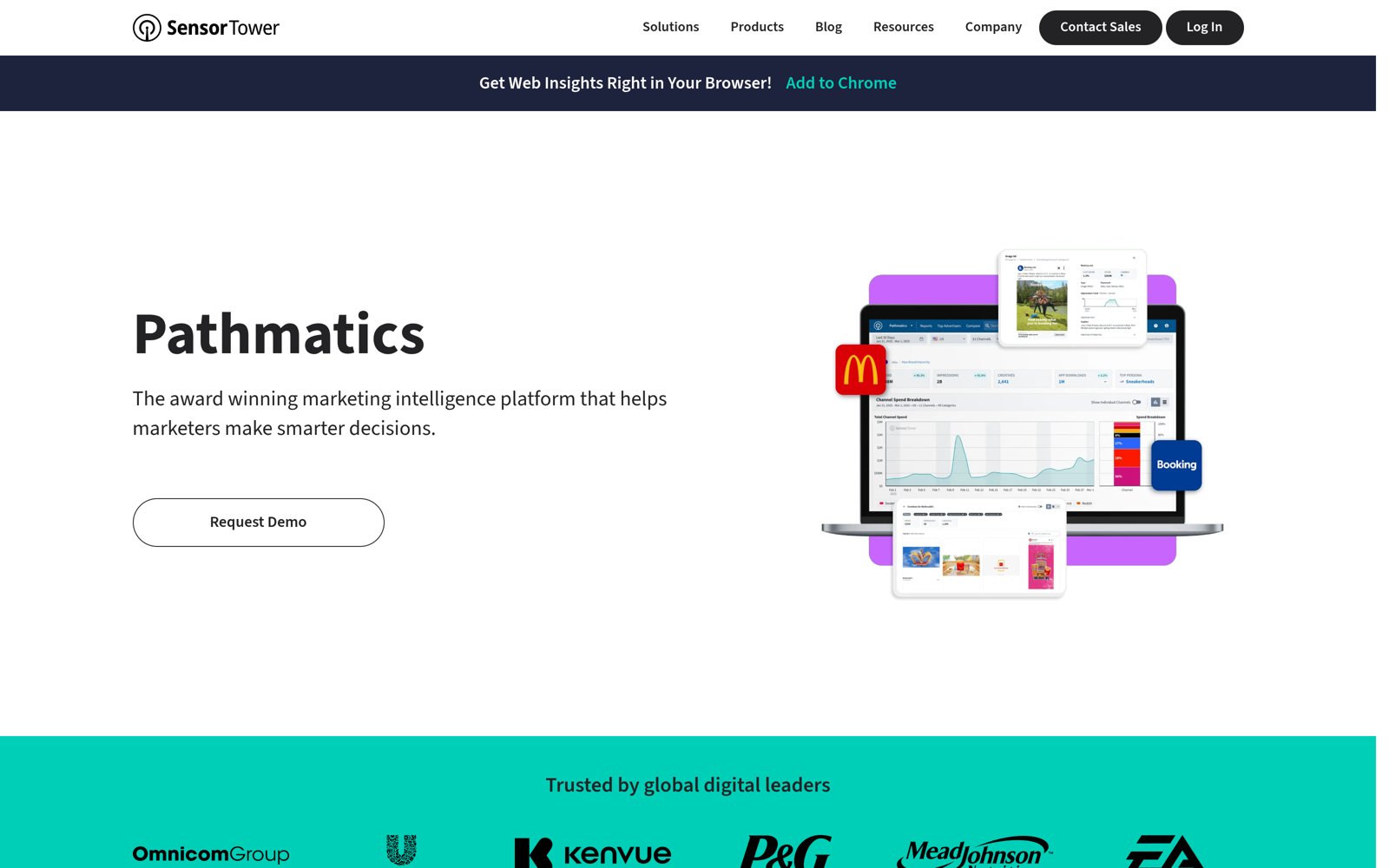
Best for: Brand, agency and media planning teams that need modeled competitor spend, impressions and share of voice across social, video, CTV and display.
- Rated 4.3/5 on G2 from about 345 reviews (listed as Pathmatics by Sensor Tower).
- Sensor Tower says 2,500+ enterprises use it, with logos including Unilever, P&G, Omnicom and EA.
- Modeled spend and impressions across Meta, TikTok, YouTube, LinkedIn, Snapchat, Pinterest and Reddit.
- Also covers OTT and CTV, display, retail media, US linear TV and, since August 2026, US ChatGPT ads.
Limitation: Pricing is quote only and spend figures are modeled estimates that Sensor Tower itself frames as directional, so it suits budget benchmarking more than exact audits.
MediaRadar
Best for: Enterprise media sellers, agencies and brand teams that need cross channel spend and creative intelligence spanning TV, CTV, digital, social, radio, print and out of home.
- Tracks 5 million brands, $280B in media spend and 35M+ ad assets across 30+ media channels.
- Rated 4.5/5 on G2 from about 134 reviews and 4.5/5 on Capterra from 240 reviews.
- 2023 Vivvix acquisition from Kantar added local TV, radio, search, out of home and Canada.
- Data Cloud (Jan 2026) delivers datasets into Snowflake, Databricks, BigQuery and Redshift.
Limitation: Pricing is quote only and expensive (Vendr cites a median near $25,000 per year), and spend figures are modeled estimates the vendor itself says are best used directionally.
Similarweb
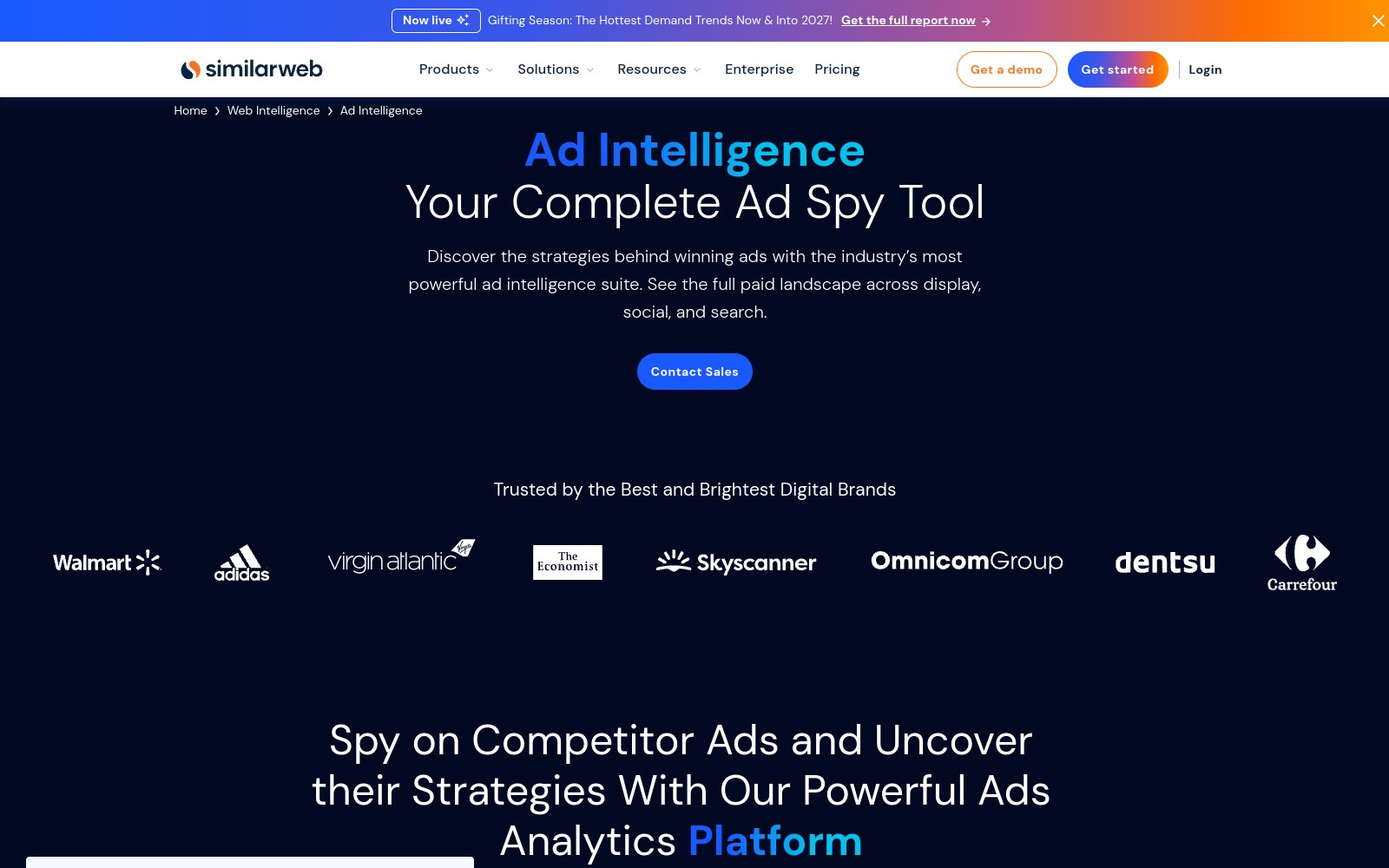
Best for: Enterprise paid media and strategy teams that want competitor ad spend, display publishers and search ads benchmarked alongside full web traffic and market share data.
- Ad Intelligence pairs competitor display, video and paid search ads with spend, share of voice and channel mix.
- Publisher analytics shows which sites carry a rival’s display campaigns.
- AI Ads (Aug 2026) adds ad libraries for ChatGPT, Google AI Mode and AI Overviews.
- Rated 4.4/5 on G2 from about 1,175 reviews and 4.6/5 on Capterra from 261 reviews.
Limitation: Ad Intelligence sits inside custom priced Web Intelligence packages, and Meta social ad coverage was still listed as coming soon in Similarweb’s own support docs, so it is weaker for social creative swipe work.
Foreplay
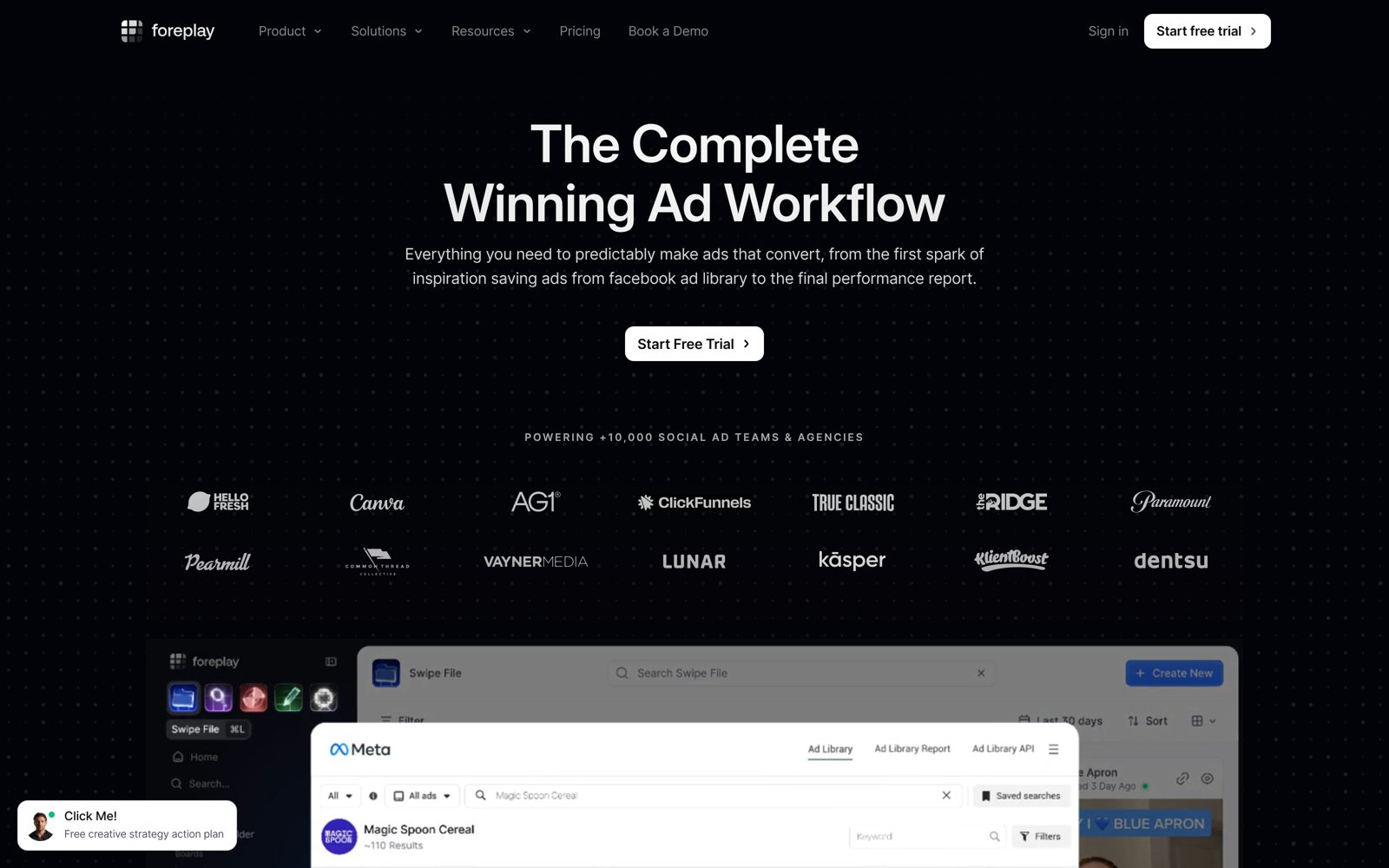
Best for: Creative strategists and DTC agencies who save, organize and brief from winning social ads across Meta, TikTok and LinkedIn.
- Rated 4.8/5 on G2 from 128 reviews, with reviewers praising ease of use and a clean UI.
- Chrome extension saves ads from Meta, TikTok and LinkedIn ad libraries into shared boards.
- Spyder tracks competitor brands and surfaces long running ads; Briefs turn saved ads into creative briefs.
- Public API plus an MCP server (June 2026) connects its ad library and boards to Claude or ChatGPT.
Limitation: It is a creative inspiration and workflow tool, not a spend intelligence platform: it offers no ad spend or impression estimates and little Google Search or display coverage.
AdClarity
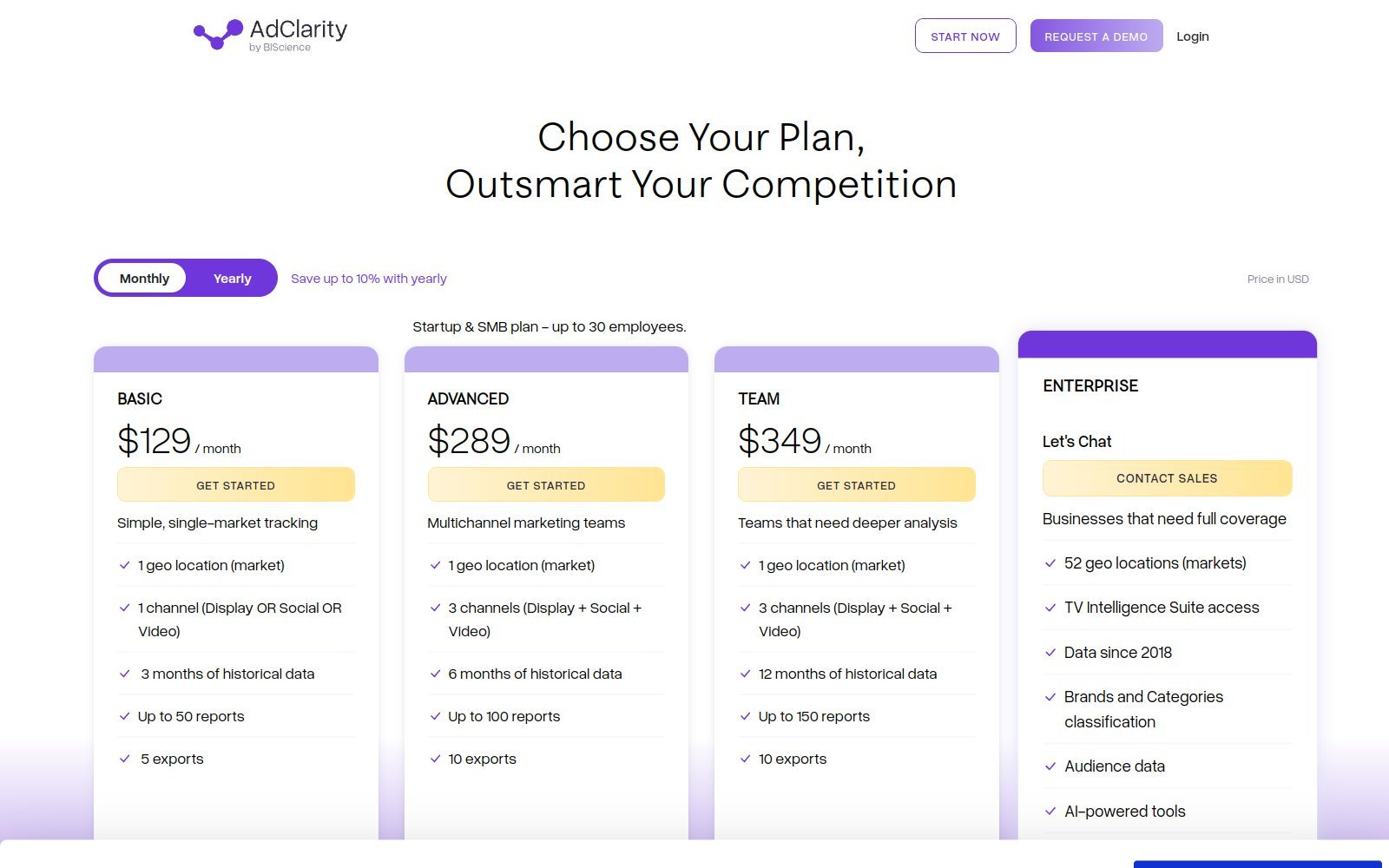
Best for: Media planners and competitive strategy teams who need panel based estimates of competitor spend, channel mix and creatives across display, social, video, CTV and US linear TV.
- Covers display, social, online video, CTV and, since March 2026, US linear TV across 100+ networks.
- Built on a 30 million member opt in panel across 52 markets, with daily updates and data back to 2018.
- Vendor reports 2,000+ brand customers including Adidas, Disney and Wix.
- Self serve plans start at $129/month with a 7 day trial, and it is bundled in Semrush Advertising Toolkit Pro.
Limitation: Self serve plans are limited to one market and 3 to 12 months of history, CTV and TV sit behind custom Enterprise pricing, and reviewers flag estimate accuracy concerns on TikTok and YouTube.
Atria
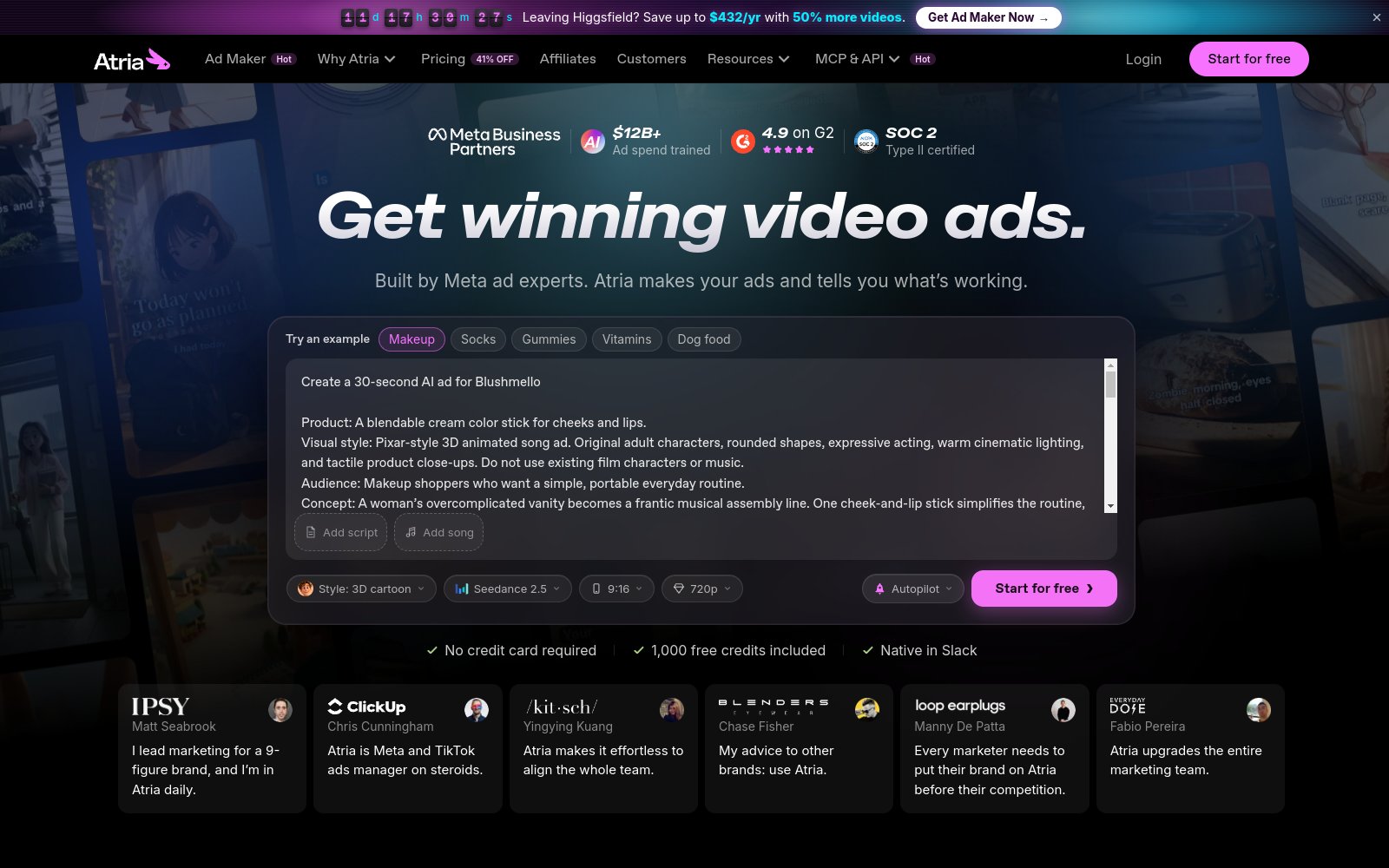
Best for: DTC brands and performance agencies on Meta and TikTok that want competitor ad research, creative analytics and AI ad generation in one workspace.
- Searchable library of Meta and TikTok ads updated weekly, with AI search, theme filters and a Chrome saver.
- Raya AI agent (Feb 2026) breaks down competitors’ hooks, personas and landing pages into briefs.
- G2 lists Atria at 5.0/5 from 22 reviews; transparent pricing starts at $19/mo.
- Vendor case studies: Orbitkey 21% higher ROAS and 25% lower CPA; SelfMade 33% ROAS lift.
Limitation: Coverage is limited to Meta and TikTok today (Google, YouTube, Pinterest and LinkedIn are roadmap only), there are no spend or impression estimates, and Trustpilot reviewers report billing and cancellation complaints.
BigSpy
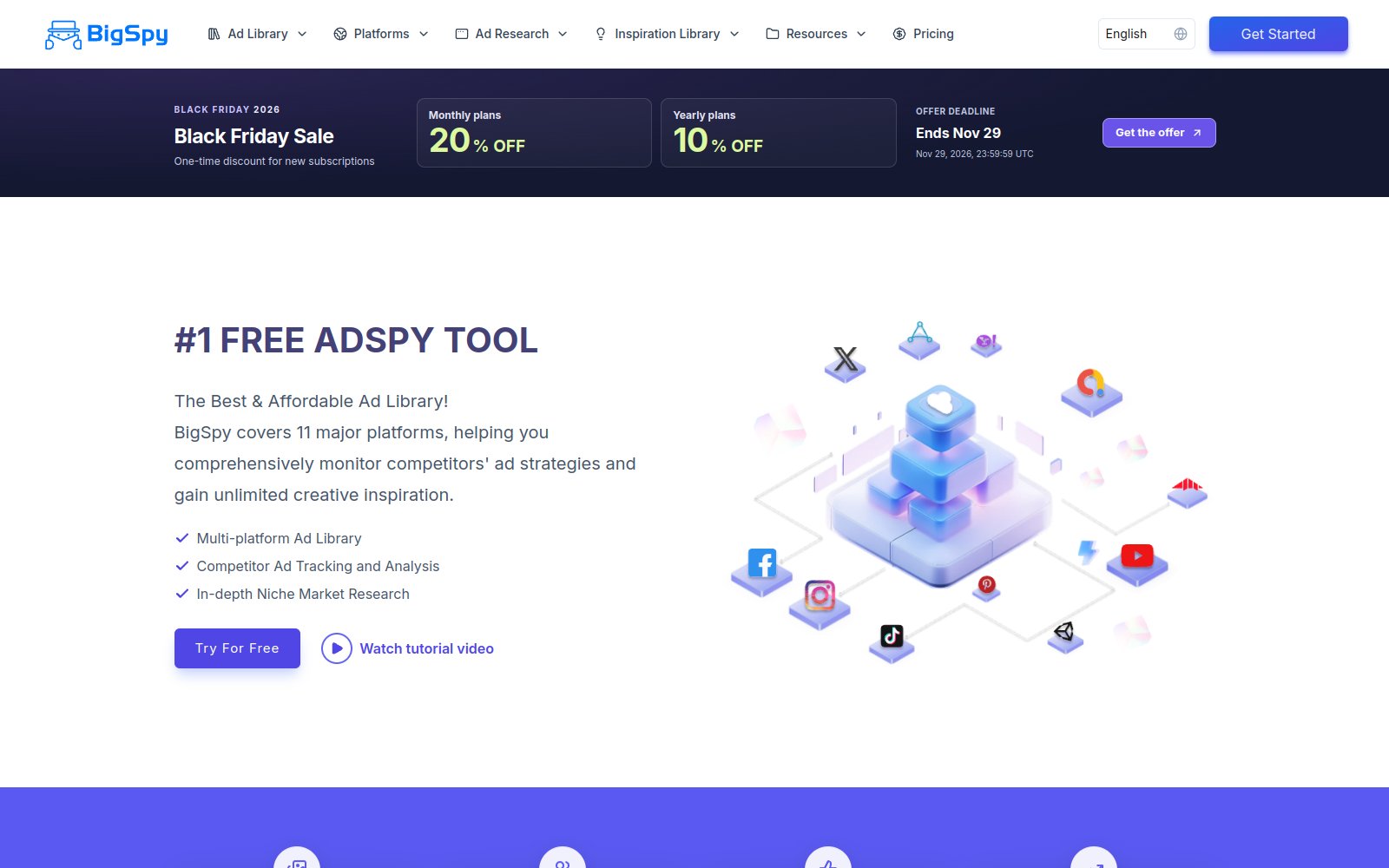
Best for: Ecommerce sellers, app marketers and affiliate media buyers who want a low cost, wide net view of competitor creatives across social, video and in app ad networks.
- Indexes over 1 billion ad creatives from nearly 10 million advertisers, per BigSpy’s homepage.
- Covers 11 ad platforms, including Facebook, Instagram, TikTok, YouTube, Google Ads, X, Pinterest and AppLovin.
- Rated 4.6/5 on G2 across about 646 reviews, with reviewers praising database breadth.
- Free Facebook only plan, and paid plans from $49/month billed yearly.
Limitation: Trustpilot sits at 2.1/5 on 25 reviews, driven by billing and refund complaints, and the interface is often described as crowded.
SpyFu
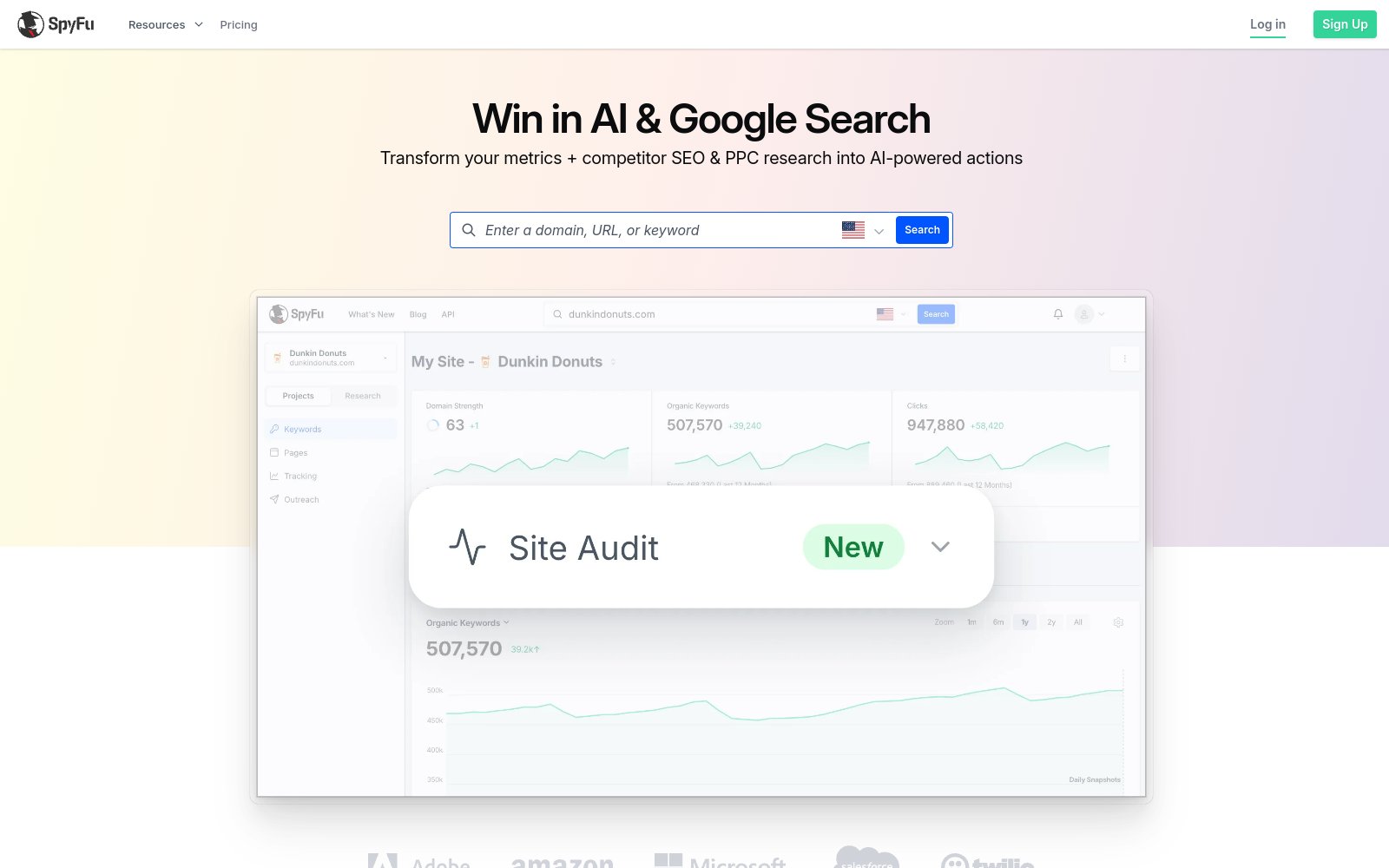
Best for: PPC managers and small paid search agencies who want to see which Google Ads keywords and ad copy competitors have bought and tested over many years.
- Ad History archive reaches back to 2007, with full ad copy, extensions and landing page URLs.
- Rated 4.6/5 on G2 from 518 reviews, with competitor research cited as the top pro.
- Exports a rival’s paid keywords with estimated clicks and cost per keyword, with no download caps.
- Self serve pricing from $39 per month ($29 billed annually), with a 30 day money back guarantee.
Limitation: SpyFu covers Google search ads only, so teams that need Meta, TikTok, YouTube, display or CTV creative will need a second tool, and reviewers flag spend estimates as directional.
Adbeat
Best for: Performance and affiliate media buyers who need to see where competitors run display, programmatic and native ads, which publishers they buy, and which landing pages they send traffic to.
- Traces each ad to its ad network, ad server, DSP and SSP, showing the buying path and publisher placements.
- Desktop and mobile display, programmatic and native ads across 35 countries on every Pro plan.
- Self serve pricing from $249 per month, a free Basic tier and a 30 day refund guarantee.
- Rated 4.1/5 on G2 from 9 reviews, with users praising competitor monitoring and advertiser comparisons.
Limitation: Coverage is centered on open web display and native, so it shows little or nothing for Meta, TikTok or search ads, and spend estimates plus 3 year history are locked to the Enterprise tier.
AdSpy
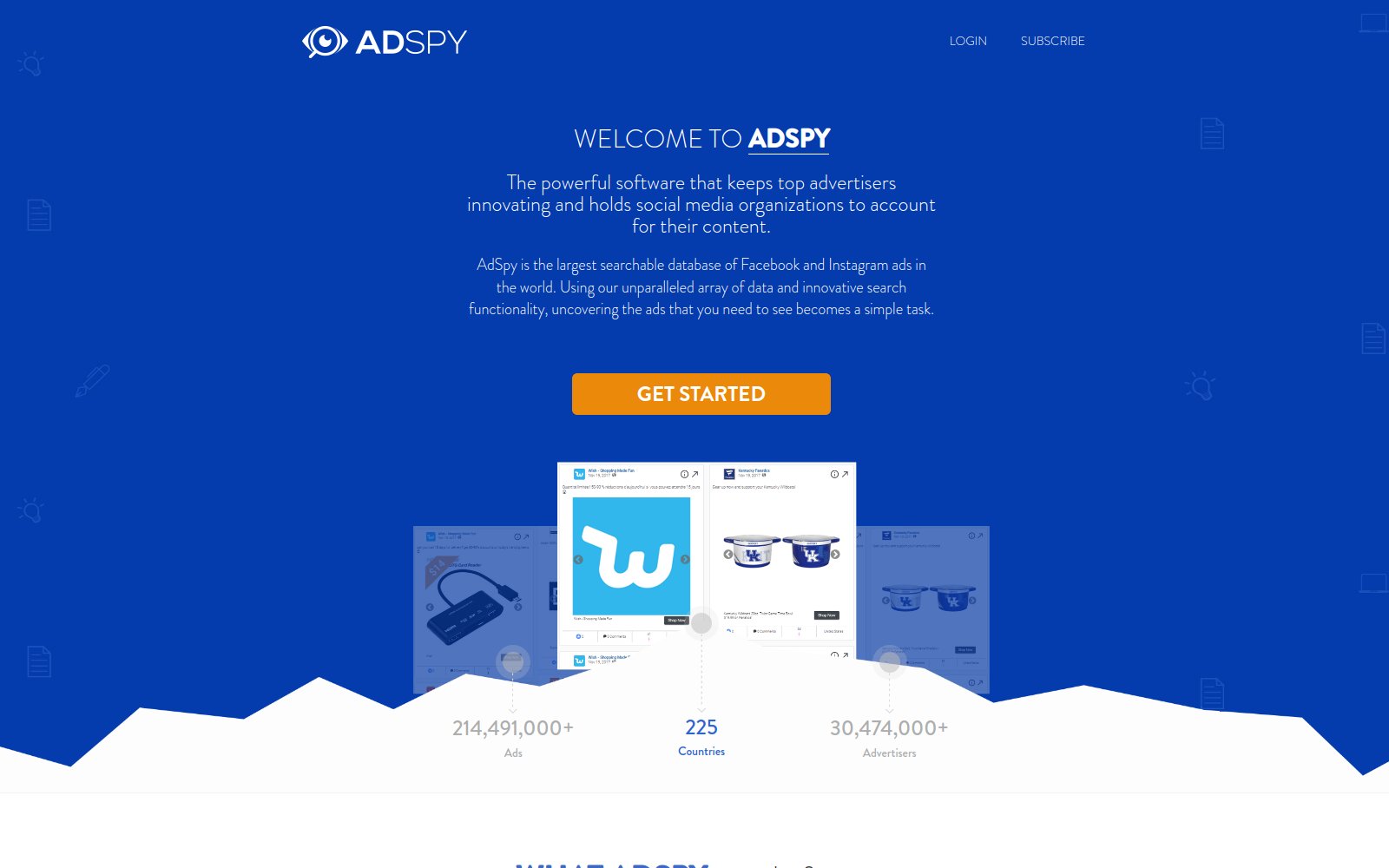
Best for: Affiliate marketers and media buyers who want to search Facebook and Instagram ads by offer, affiliate network and comment text.
- Claims a searchable archive of 214M+ Facebook and Instagram ads from 30M+ advertisers.
- Coverage spans 225 countries and 88 languages, with an archive reaching back to its 2018 launch.
- Affiliate filters search by network, affiliate ID, offer ID and landing page technologies.
- Single flat plan at $149 a month with virtually unlimited searching and no credit tiers.
Limitation: It covers only Facebook and Instagram, has no free trial, and the UK company named on its site shows as dissolved on Companies House since March 2025, which raises vendor accountability questions.
Side-by-Side Comparison
Summary of where each Ad Intelligence Tools tends to fit best.
| Platform | Best For | Key Strength | Primary Limitation | Score |
|---|---|---|---|---|
| Sensor Tower | Enterprise competitive spend and share of voice | Modeled spend and impression estimates across social, OTT/CTV, display, retail media and ChatGPT ads in one omnichannel view. | Pricing is quote only and spend figures are modeled estimates that Sensor Tower itself frames as directional, so it suits budget benchmarking more than exact audits. | 89 |
| MediaRadar | Cross channel enterprise spend intelligence | Combines linear TV, CTV, digital, social, radio, print and out of home ad occurrence and estimated spend in one platform after absorbing Kantar’s Vivvix. | Pricing is quote only and expensive (Vendr cites a median near $25,000 per year), and spend figures are modeled estimates the vendor itself says are best used directionally. | 87 |
| Similarweb | Cross channel ad spend benchmarking | Ties competitor ad spend, creatives and publishers to Similarweb’s traffic and market share data, now including ads inside ChatGPT and Google AI. | Ad Intelligence sits inside custom priced Web Intelligence packages, and Meta social ad coverage was still listed as coming soon in Similarweb’s own support docs, so it is weaker for social creative swipe work. | 85 |
| Foreplay | Social ad swipe files and briefs | The most complete research to brief workflow for social creative teams, from one click ad saving to competitor tracking and AI briefs. | It is a creative inspiration and workflow tool, not a spend intelligence platform: it offers no ad spend or impression estimates and little Google Search or display coverage. | 83 |
| AdClarity | Cross media competitor spend estimates | One panel based methodology spans digital, social, video, CTV and US linear TV, so budget shifts between channels can be compared directly. | Self serve plans are limited to one market and 3 to 12 months of history, CTV and TV sit behind custom Enterprise pricing, and reviewers flag estimate accuracy concerns on TikTok and YouTube. | 82 |
| Atria | Meta and TikTok creative strategy teams | Combines a large Meta and TikTok swipe library and competitor tracking with AI briefs, ad generation and creative reporting tied to your own ad account. | Coverage is limited to Meta and TikTok today (Google, YouTube, Pinterest and LinkedIn are roadmap only), there are no spend or impression estimates, and Trustpilot reviewers report billing and cancellation complaints. | 81 |
| BigSpy | Budget multi platform creative research | Very broad platform and creative coverage at an entry price far below enterprise ad intelligence suites. | Trustpilot sits at 2.1/5 on 25 reviews, driven by billing and refund complaints, and the interface is often described as crowded. | 78 |
| SpyFu | Google Ads keyword and copy history | Its long Google Ads archive shows every keyword a rival bought and every ad variation it tested, with winners and losers by keyword. | SpyFu covers Google search ads only, so teams that need Meta, TikTok, YouTube, display or CTV creative will need a second tool, and reviewers flag spend estimates as directional. | 77 |
| Adbeat | Display and native media buyers | Maps competitors’ publisher placements, ad networks and landing pages across display, programmatic and native inventory. | Coverage is centered on open web display and native, so it shows little or nothing for Meta, TikTok or search ads, and spend estimates plus 3 year history are locked to the Enterprise tier. | 75 |
| AdSpy | Affiliate offer research on Meta | Deep affiliate network, offer ID and comment search across a very large Meta only ad archive. | It covers only Facebook and Instagram, has no free trial, and the UK company named on its site shows as dissolved on Companies House since March 2025, which raises vendor accountability questions. | 64 |
How Mktg.Tech Evaluated Each Ad Intelligence Tool
We used our 7-Point Evaluation Framework™, weighted for what matters most to Paid Media & Creative Strategy Teams.
Scope & Breadth
Channel & Network Coverage – how much of a competitor’s media plan the tool can actually see, judged on Meta, TikTok, YouTube, LinkedIn, Google Search, display and programmatic, native, CTV, linear TV and AI chat ads, plus the number of countries covered.
Quality & Reliability
Data Accuracy & Freshness – how far the numbers and archive can be trusted, judged on whether spend and impressions are estimated at all, how the estimates are built and disclosed, refresh cadence and the depth of the historical ad archive.
Utility & Output
Creative & Competitive Insight – how quickly a team gets from search to a usable conclusion, judged on filters, landing page capture, share of voice, longevity signals, AI analysis of hooks and angles, and brief generation.
Communication & Integration
Workflow & Data Access – how well findings move into the rest of the stack, judged on APIs, MCP servers, warehouse delivery, exports, Chrome extensions, shared boards and alerts.
Operational Excellence
Scale & Value – what it costs to track the competitors that matter, judged on published pricing, entry price, seats, tracked brand limits, history limits by tier and trial or refund terms.
Trust & Versatility
Data Sourcing & Compliance – whether a vendor explains where its ad data comes from and protects customer data, judged on published methodology, opt in panel disclosures, SOC 2 or ISO 27001, GDPR statements and corporate transparency.
Evidence & Impact
Proven Outcomes – evidence that the tool improves real decisions, judged on customer counts, named case studies with quantified results, review volume and sentiment across G2, Capterra, TrustRadius and Trustpilot.
How We Scored Each Ad Intelligence Tool
Data Sources Used
- Official Product & Pricing Pages: Channels, countries, plan names, tracked brand limits and published prices read from each vendor’s own product, pricing and help center pages, with quote only plans recorded as such.
- Data Methodology Disclosures: Vendor statements on how ads are collected and how spend and impressions are estimated, from opt in panels and crawlers to public ad library sources.
- Product Release Notes: Dated 2025 and 2026 announcements, used to confirm active development such as ChatGPT ad tracking, MCP servers, AI agents and new channel coverage.
- Independent Review Platforms: G2, Capterra, TrustRadius and Trustpilot ratings, review counts and recurring themes, with blocked fetches and snippet-only figures labeled in the research file.
- Customer Case Studies: Named customer results with quantified outcomes, labeled vendor-published or third-party.
- Security & Corporate Disclosures: SOC 2, ISO 27001 and GDPR statements, public filings, ownership records and acquisition announcements.
Evaluation Filters
- Core Capability: Must let users search or track competitors’ live and historical ads as a primary capability, not as a side feature of a broader suite.
- Multi Advertiser Coverage: Must cover ads from advertisers the user does not manage, sourced beyond the user’s own ad accounts.
- Active Development: Must show product updates, pricing changes or new coverage in 2025 or 2026.
- Professional Focus: Must be sold to paid media, creative, agency or media sales teams, with self serve or enterprise plans available in the US.
- Verifiable Footprint: Must have a working public website and at least one independent review listing or public company disclosure.
What’s Inside the Download
How the Framework Is Weighted
| Criteria | Weight | Relative Emphasis |
|---|---|---|
| Scope & Breadth | 20% | |
| Quality & Reliability | 15% | |
| Utility & Output | 15% | |
| Communication & Integration | 15% | |
| Operational Excellence | 15% | |
| Trust & Versatility | 10% | |
| Evidence & Impact | 10% |
Tool Background & Engagement Profile
| Platform | HQ / Parent Company | Typical Client Size | Primary Focus |
|---|---|---|---|
| Sensor Tower | San Francisco, CA (Sensor Tower; Pathmatics originally Santa Monica, CA, acquired 2021) | Mid-Market to Enterprise | Digital Advertising Insights (formerly Pathmatics): omnichannel ad spend and impressions |
| MediaRadar | New York, NY (private; backed by Thompson Street Capital Partners and Endicott Capital) | Mid-Market to Enterprise | Cross channel ad spend and creative intelligence |
| Similarweb | Tel Aviv, Israel (Similarweb Ltd., NYSE: SMWB; Admetricks acquired 2024) | Mid-Market to Enterprise | Display, search and AI ad spend intelligence |
| Foreplay | Toronto, ON, Canada (per ZoomInfo; vendor does not state HQ; privately held, founder led) | Solo to Mid-Market | Social ad creative research and briefing |
| AdClarity | New York, NY and Tel Aviv, Israel (made by BIScience; independent, resold through the Semrush App Center) | SMB to Enterprise | Cross media ad spend and channel mix intelligence |
| Atria | San Francisco, CA (independent, founder led) | Solo to Mid-Market | Meta and TikTok creative research and generation |
| BigSpy | Not publicly disclosed (operator named as BigSpy Inc in site terms; ZoomInfo lists Seychelles) | Solo to SMB | Creative ad spy across social and in app networks |
| SpyFu | Scottsdale, AZ (independent, founder owned, bootstrapped) | Solo to Mid-Market | Google search ads and keyword competitor intelligence |
| Adbeat | Walnut Creek, CA (independent, founder led) | SMB to Enterprise | Display, programmatic and native ad intelligence |
| AdSpy | Not publicly disclosed (contact page names AD NAVIGATOR LTD, UK) | Solo to SMB | Facebook and Instagram ad search |
Key Capabilities Offered
Sensor Tower
- Estimated ad spend and impressions by brand, channel and time period, current and historical
- Creative library with placements and ad paths across social, display, video and OTT
- Share of voice and category benchmarking for brands, agencies, publishers and financial analysts
- Retail Media Insights add on for retailer ad network spend
- US ChatGPT ads tracking: spend, impressions, share of voice and creatives
- Google Ads integration that pulls existing Meta and TikTok creatives into Performance Max and Demand Gen
MediaRadar
- Competitive, Commercial, Creative, Market, Sports and Political Ad Intelligence modules
- Estimated ad spend and occurrences across national and local TV, CTV, digital, search, social, radio, print and OOH
- Advertiser prospecting with brand profiles and contact data for media sales teams
- Market Intelligence view of spend by industry, category and channel for media owners (April 2026)
- Data Cloud delivery into Snowflake, Databricks, Google BigQuery and Amazon Redshift
- VideoAmp ratings integrated alongside TV ad occurrence data (July 2026)
Similarweb
- Competitor ad spend, impressions and channel mix estimates across display and paid search
- Creative library of display creatives, search ads and videos with landing page analysis
- Publisher analytics: which sites run an advertiser’s campaigns and available display inventory
- Share of voice and advertiser performance benchmarking against category leaders
- Brand protection with trademark violation detection and bidding change alerts
- AI Ads gallery covering sponsored ads in ChatGPT, Google AI Mode and AI Overviews
Foreplay
- Swipe File boards with a Chrome extension and mobile app for saving ads from Meta, TikTok and LinkedIn ad libraries
- Discovery ad search engine with filters across a library the vendor sizes at 100M+ to 200M+ ads
- Spyder competitor brand tracking that auto saves every new ad a tracked brand launches
- Lens creative analytics for your own ad account performance, priced per brand rather than by ad spend
- Briefs builder with AI assisted brief creation for UGC creators and designers
- Public API and MCP server for piping ad data into AI agents and internal tools
AdClarity
- Estimated competitor ad spend, impressions and share of voice by brand, category, channel and publisher
- Display, social, video, CTV and US linear TV tracking with DMA, daypart and program breakdowns for TV
- Creative library with keyword based ad search, landing pages and campaign level results
- Click through rate benchmarking at ad, campaign, brand and geographic level (added December 2025)
- Ad objective classification that labels campaigns as brand awareness or performance
- AI Chatbot and AI Insights narratives, custom dashboards, scheduled email reports and exports
Atria
- Searchable library of Meta and TikTok ads with AI search, theme filters and a Chrome extension for saving ads
- Competitor brand following (3 to 200 brands by plan) tracking creative volume, format mix and promotions
- Raya AI strategist that tags winning hooks, personas and messages and writes creative briefs
- Ad Maker and ad cloning to generate image and video ads in 9:16, 4:5 and 1:1 formats
- Creative analytics and conversational visual reports from connected Meta and TikTok ad accounts
- Boards for team swipe files, MCP and REST API access, and guest client access on higher tiers
BigSpy
- Multi filter ad search by platform, country, language, ad format, CTA and engagement
- Competitor page and domain following with tracked creatives and favorites
- Landing page, playable ad and TikTok Shop ad research
- Video analysis, video copy recognition and Creative to AI Prompt tools
- Trending and rising charts plus Top 1% and Top 10% creative selectors
- Chrome extension that saves ads from Meta Ad Library and TikTok into a BigSpy library
SpyFu
- Google Ads History: every ad a domain ran by keyword, with full copy, extensions, landing pages and SERP screenshots
- PPC competitor keyword lists with estimated clicks, CPC and monthly ad spend trends
- Gap view of core keywords top competitors buy that you do not, plus Google Ads Advisor recommendations
- Negative match recommendations based on broad matches competitors tried and abandoned
- PPC Ad Rank Tracker for ranking progress and impression share on keyword groups
- REST API (Pro + AI and above), CSV exports, and a SpyFu GPT for ChatGPT
Adbeat
- Keyword search across advertisers, ads and publishers with device, date range, ad network and country filters
- Publisher placement URLs and Direct Buys placement discovery for media planning
- Alerts on competitors’ new ads, ad networks and publishers (5 on Standard, 10 on Advanced, unlimited Smart Alerts on Enterprise)
- Side by side advertiser comparisons and share of voice overlays
- Estimated ad spend, top advertisers by category, ad paths, ad tags and authorized seller tracking on Enterprise
- CSV, PDF and PowerPoint report exports plus a separately priced REST API via the Adbeat Developer Portal
AdSpy
- Keyword, advertiser, URL and domain search across Facebook and Instagram ads
- Filters for country, language, age, gender, likes, media type, call to action and date
- Affiliate network, affiliate ID and offer ID filters (e.g. ClickBank, MaxBounty, CJ)
- Landing page technology detection, with a vendor claim of bypassing cloakers
- Search inside user comments on ads, with demographic reach estimates
- Saved searches and tags, plus API access as a separately priced add on
Final Takeaway From Mktg.Tech
Across all evaluated sources and weighted performance criteria, Sensor Tower’s Digital Advertising Insights, the product long known as Pathmatics, ranks as the strongest overall ad intelligence tool for 2026. It wins on the criteria that carry the most weight for paid media teams: the broadest modeled spend and impression coverage, spanning Meta, TikTok, YouTube, LinkedIn, Snapchat, Pinterest, Reddit, OTT and CTV, display, retail media and, since August 2026, US ChatGPT ads, backed by SOC 2 Type II attestation, more than 2,500 enterprise users and one of the deepest review bases in the enterprise tier. MediaRadar runs it close with the widest cross media view, including linear and local TV, radio, print and out of home, and Similarweb ties ad spend to traffic and market share data.
That does not make Sensor Tower the right choice for every team. Creative strategists on Meta and TikTok will usually get more from Foreplay or Atria at a fraction of the price, PPC teams focused on Google Search should look first at SpyFu, and teams that run their own campaigns may pair any of these with PPC management software. The single most important decision factor is whether you need to know what competitors spend or what they say, because the tools that answer one question well rarely answer the other.
Editorial Independence & About Mktg.Tech
About This Research
This report was independently produced by the Mktg.Tech Research & Insights team. Rankings are based on publicly available information, vendor product, pricing and data methodology documentation, dated release notes, independent review-platform data, and structured evaluation against our 7-Point Evaluation Framework. No vendor included in this analysis paid for placement, ranking influence, or editorial consideration. Rankings will be reviewed and updated on a quarterly basis as ad intelligence continues to evolve.
Share Your 2026 Recognition
The companies featured in Mktg.Tech’s Best Ad Intelligence Tools of 2026 are invited to display this official badge on their website, documentation, or marketing materials. For transparency and verification, the badge should link back to the official report.
Use of this badge is intended for platforms included in the 2026 report and signifies verified inclusion.
Frequently Asked Questions
What are the best ad intelligence tools in 2026?
Sensor Tower ranks #1 in our 2026 evaluation with a score of 89 out of 100. It is best for brand, agency and media planning teams that need modeled competitor spend, impressions and share of voice across social, video, CTV and display.
How many ad intelligence tools did Mktg.Tech evaluate?
We evaluated and scored 10 ad intelligence tools for this ranking. Each one was assessed against the same 7-Point Evaluation Framework and scored out of 100, then ordered by final score.
How does Mktg.Tech score ad intelligence tools?
Every entrant is measured against seven weighted categories: Scope & Breadth (20%), Quality & Reliability (15%), Utility & Output (15%), Communication & Integration (15%), Operational Excellence (15%), Trust & Versatility (10%), and Evidence & Impact (10%). The weights total 100%, and the resulting score determines each platform’s rank.
Which ad intelligence tool is the best alternative to Sensor Tower?
MediaRadar ranks #2 with a score of 87 out of 100 and leads the Media Sales Intel category, making it the strongest alternative for teams whose priorities differ from the overall winner.
Are these rankings sponsored or paid placements?
No. No vendor paid for placement, ranking influence, or editorial consideration. Rankings are based on publicly available information and structured evaluation, and are reviewed and refreshed on a quarterly basis.
How to Choose the Right Ad Intelligence Tools
Choosing an ad intelligence tool in 2026 starts with one question: do you need to know what competitors spend, or what they say? Spend and impression estimates come from panels, crawlers and models, and they cost enterprise money. Creative research tools draw on public ad libraries, cost a fraction as much and are built for the people who write the next ad.
The second question is which channels matter. A DTC brand living on Meta and TikTok, a B2B team buying Google Search and LinkedIn, and a national advertiser planning CTV and linear TV all call their research ad intelligence, but they reward very different tools. Buying the wrong coverage leaves the most important competitor invisible.
1. Decide Between Spend Data and Creative Research
Every tool in this report falls on one side of this line or tries to straddle it.
- Spend Estimates: Needed for budget benchmarking, share of voice and media planning. Ask how the model is built and how it is validated.
- Creative Archives: Needed for hooks, angles and offers. Ask how long ads are kept and how often new ones are captured.
- Directional Use: Even vendors with large panels describe spend figures as directional, so plan to use them for trends, not audits.
- Budget Reality: Spend platforms are usually quote based and often five figures a year, while creative tools start under $50 a month.
2. Map Coverage to Your Competitors’ Channels
A tool is only as good as its view of the channels your rivals actually buy.
- Social: Confirm Meta, TikTok, YouTube, LinkedIn, Pinterest and Snapchat individually rather than trusting a channel count.
- Search: Google Ads copy and keyword history is a specialty, and most social tools do not cover it.
- Display, Native and CTV: Open web and streaming coverage separates enterprise platforms from swipe tools.
- Countries: Check that the markets you sell in are covered on your plan, since some tiers allow only one market.
3. Test the Data Before You Sign
Run a trial against competitors you already know well.
- Known Campaigns: Search for campaigns you know ran and check whether they appear and how quickly.
- Your Own Brand: Compare the tool’s estimate of your own spend with your actual numbers.
- Archive Depth: Confirm how much history your tier includes, since several vendors cap it below Enterprise.
- Refresh Cadence: Ask how often new ads and estimates appear, and get the answer in writing.
4. Plan How Insight Reaches the Team
Research that stays in a dashboard rarely changes the next campaign.
- Boards and Briefs: Creative teams benefit from shared swipe boards and brief tools tied to saved ads.
- APIs and MCP: Look for an API or MCP server if analysts or AI agents will query the data directly.
- Warehouse Delivery: Enterprise teams may want datasets delivered into Snowflake, BigQuery or Databricks.
- Alerts: Competitor alerts on new ads, spend shifts or bidding changes save the most time.
5. Model the Real Cost
Entry prices rarely reflect what a working team pays.
- Seats: Several plans include one user, with extra seats billed monthly.
- Tracked Brands: Check how many competitors you can follow on each tier.
- Gated Features: Spend estimates, CTV, extra markets and longer history are often Enterprise only.
- Contract Terms: Read refund and cancellation terms, since billing complaints recur in reviews of lower cost tools.
Final Takeaway
The right ad intelligence tool should show the channels your competitors actually buy, give numbers you can defend and get insight into the next brief or media plan quickly. Prioritize platforms that offer:
- Matching Coverage: the social, search, display, CTV or AI chat channels where your rivals spend.
- Disclosed Methodology: a clear explanation of how ads are captured and spend is estimated.
- Usable Insight: filters, longevity signals and AI analysis that lead to a decision.
- Connected Workflow: boards, APIs, MCP or warehouse delivery that fit how your team works.
- Predictable Cost: pricing that still works with the seats, markets and history you will need.
One pattern runs through this category and it is worth stating plainly: almost every spend figure, library size and customer count in this report comes from the vendors themselves, and several vendors publish library sizes that disagree with each other. Treat them as claims to test in a trial, not as facts to plan a budget around.