An Independent Review for Brand & Communications Teams
The generative AI shift has redefined brand management in 2026. Moving beyond static PDF guidelines and manual sign-off queues, these platforms now encode brand rules once and use AI to check, generate and correct content against them, whether a designer, a regional marketer or an AI assistant made it. This report provides a structured comparison of the leading AI brand management tools, with Bynder leading the market, to help brand and communications teams select the right platform for their specific needs. It spans brand portals and asset hubs, on-brand content generation, document and template governance, and written-voice enforcement, because the AI marketing tools most teams already use only stay on brand when something upstream holds the rules.
Bynder
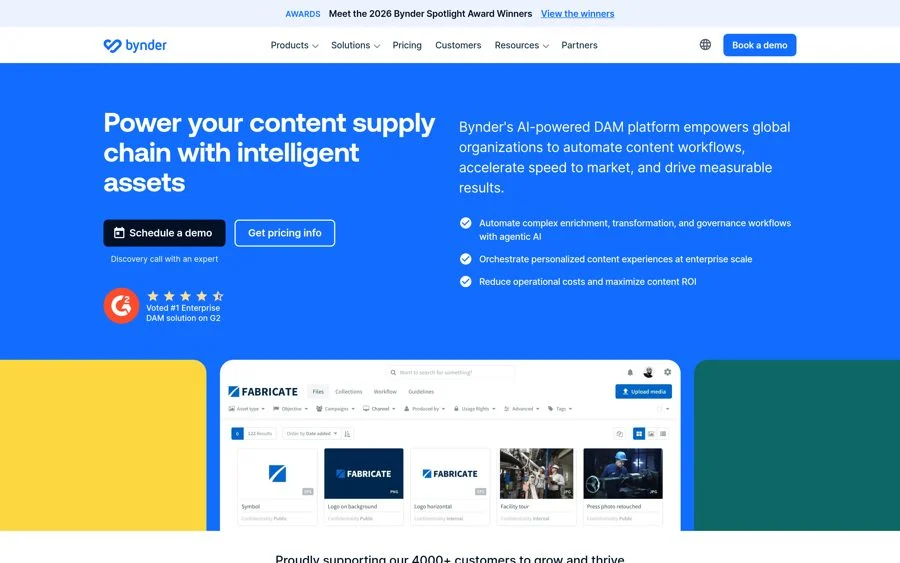
Best for: Mid-market and enterprise brand teams that want guidelines, approved assets, templates and AI compliance checks governed from one system of record.
- Rated 4.5/5 on Capterra across 228 reviews, and Bynder claims 4,000+ brand customers and 1.7M+ users.
- Its Brand Compliance Agent, launched December 2025, audits assets for off-brand colors and incorrect logos.
- Living web brand guidelines sync colors, typography and UI elements directly with the approved asset library.
- Studio locks logos, fonts and layouts so non-designers can batch-create on-brand image and video variants.
Limitation: Pricing is quote-only and modular, with third-party Vendr data putting the median contract near $41,800 a year, and reviewers report a steep setup curve for admins and Brand Portal owners.
Frontify
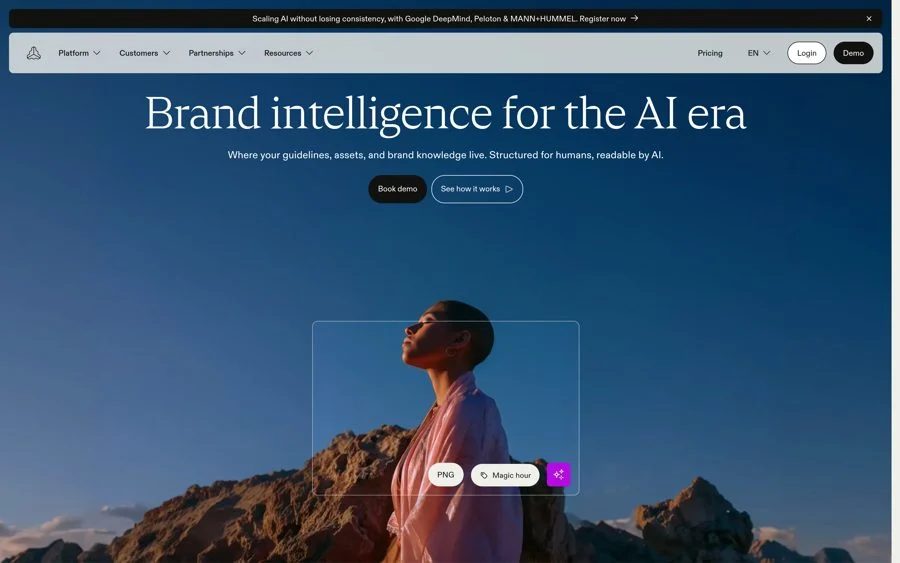
Best for: Mid-market and enterprise brand teams that want guidelines, assets and templates in one governed portal that AI tools can read.
- Rated 4.8/5 on Capterra across 82 reviews, with ease of use and customer service both scored 4.8.
- Customers on its homepage include Microsoft, OpenAI, Uber, Lufthansa Group, Budweiser and Telefonica.
- A built-in Brand Assistant answers guideline questions and reviews copy for tone of voice inside the portal.
- Holds SOC 2 Type II, ISO 27001:2022 and TISAX certifications, so it clears strict enterprise security reviews.
Limitation: Pricing is quote-only on a monthly active user model that reviewers call expensive and hard to predict, and its MCP connector for AI assistants was still in beta during this evaluation.
Adobe GenStudio
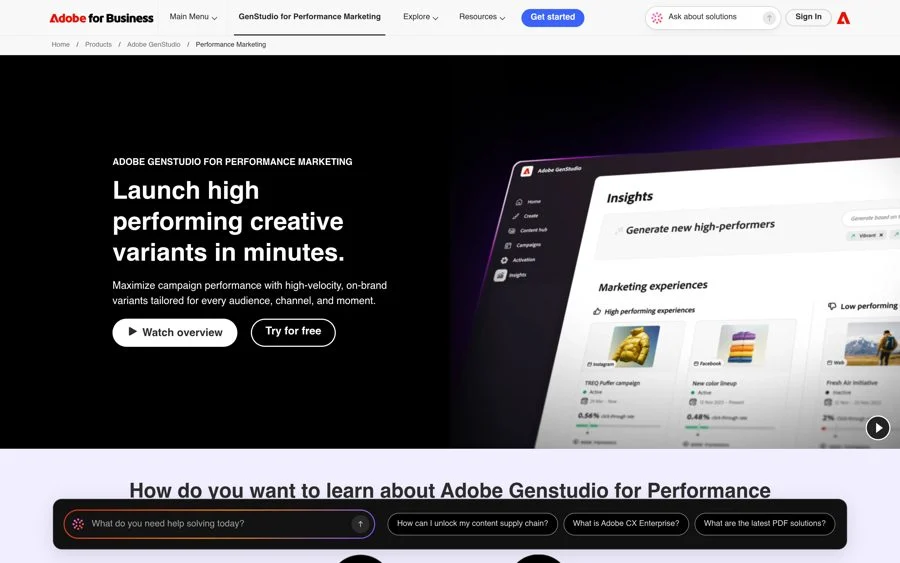
Best for: Large enterprises already on Adobe Experience Cloud that need to produce, brand check and activate high volumes of paid media and email variants.
- Brand validation scores each asset against brand, channel and accessibility rules and rescores as you edit.
- The September 2026 release added bulk activation to Meta, LinkedIn, TikTok, CM360, Amazon Ads and ChatGPT ads.
- Brand Intelligence, announced April 2026, learns brand rules from review feedback, approvals and rejections.
- Workfront review and approval runs inside the app, so brand sign-off happens before anything ships.
Limitation: Pricing is quote-only and enterprise-scale, and the product is built around paid media and email production, so teams wanting a broad brand portal or guideline hub will need AEM Assets or another tool alongside it.
Canva
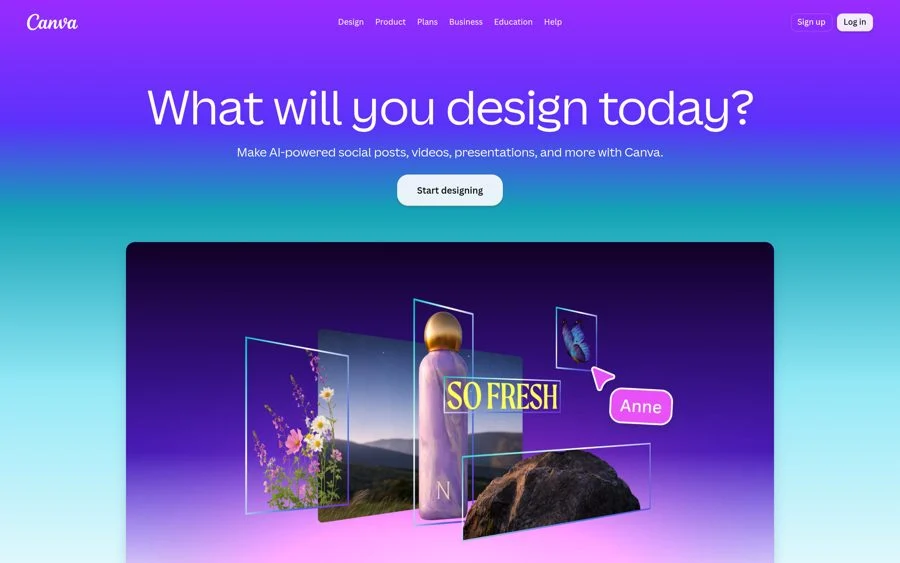
Best for: Brand and communications teams that need non-designers across many departments to produce on-brand visual content quickly from locked templates and approved assets.
- Rated 4.7/5 on Capterra across 13,454 reviews, and used by 265 million+ people every month.
- Brand Controls lock designs to approved colors and fonts and can require sign-off before anything publishes.
- Brand Kits and Brand Templates steer Canva AI generations toward a team’s own fonts, colors and layouts.
- Canva Shield gives Enterprise customers above 100 seats AI output indemnification at no extra cost.
Limitation: Canva governs templates and assets but is not a full DAM or brand-compliance scanner, AI output resolution remains too low for large-format print, and Canva signs no BAA, so it is unsuitable for regulated healthcare marketing.
Typeface
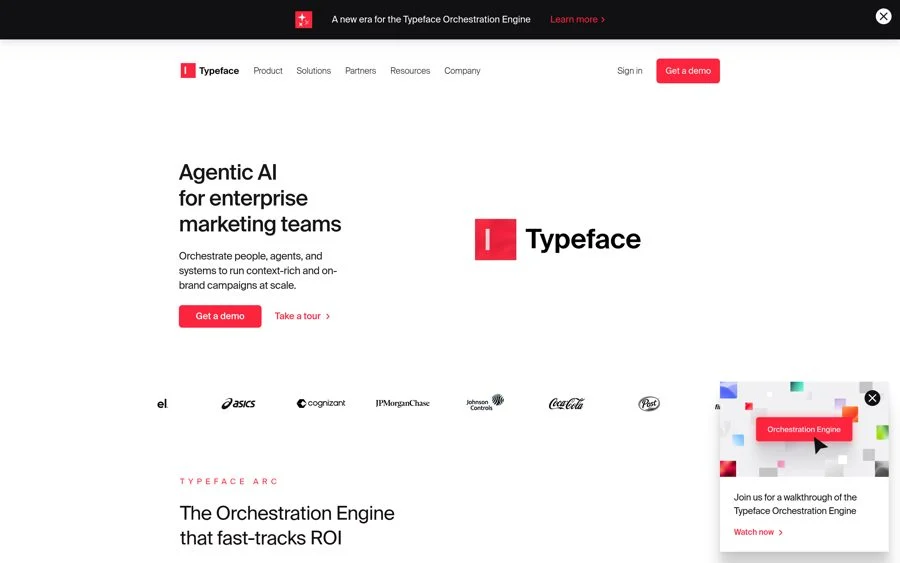
Best for: Large enterprise brand and marketing teams that need governed, on-brand content generation and agentic campaign execution across many channels and markets.
- Holds SOC 2 Type II, ISO 27001 and ISO/IEC 42001:2023 certifications, a rare AI management standard.
- Arc Graph carries brand voice, ontologies and guidelines into Claude and ChatGPT, not only inside Typeface.
- A built-in Brand Agent flags off-brand language and formatting across email, web, ads, images and video.
- Named a Gartner Cool Vendor in Generative AI for Marketing, backed by $165M raised from Salesforce Ventures and others.
Limitation: There is no public pricing or self-serve plan, its newest adaptive agents were still in preview with design partners, and no independent reviews of the platform could be found on G2, Capterra or Trustpilot.
Papirfly
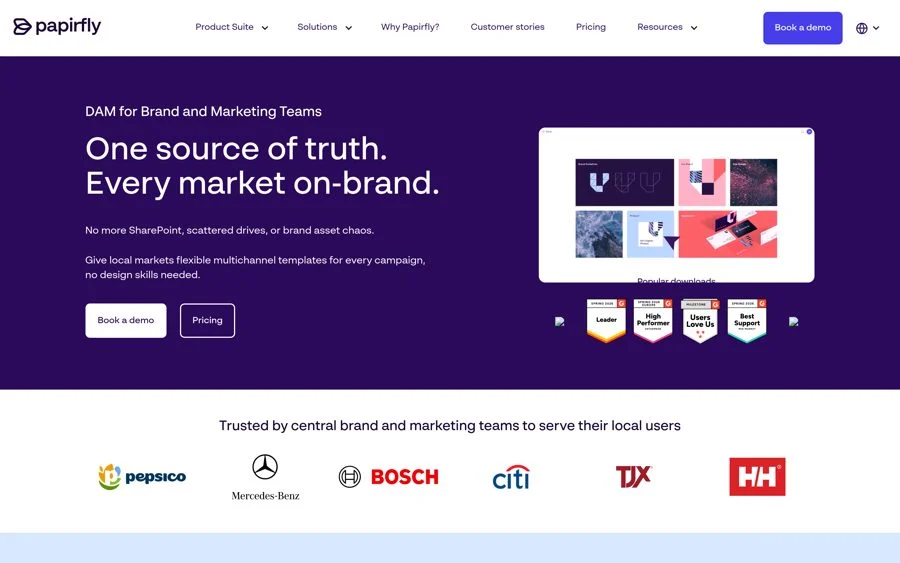
Best for: Global, multi-market brand teams that need one governed hub for assets, guidelines and locked templates so local markets can produce compliant content without designers.
- Serves 1,500+ brands and over 1 million users, with PepsiCo, BMW and Mondelez among named customers.
- Rated 4.7/5 on Capterra across 20 reviews, with ease of use scored 4.8.
- Centrally locked templates let local teams self-serve print, social, video, email and banner content.
- ISO 27001 and SOC 2 Type II certified, with SAML SSO, MFA and native Entra ID and Okta integration.
Limitation: Pricing is quote-only with no public tiers, its conversational Brand Assistant is still labeled Beta in Papirfly’s own support docs, and its AI focuses on asset operations rather than generating new on-brand copy or imagery.
Writer
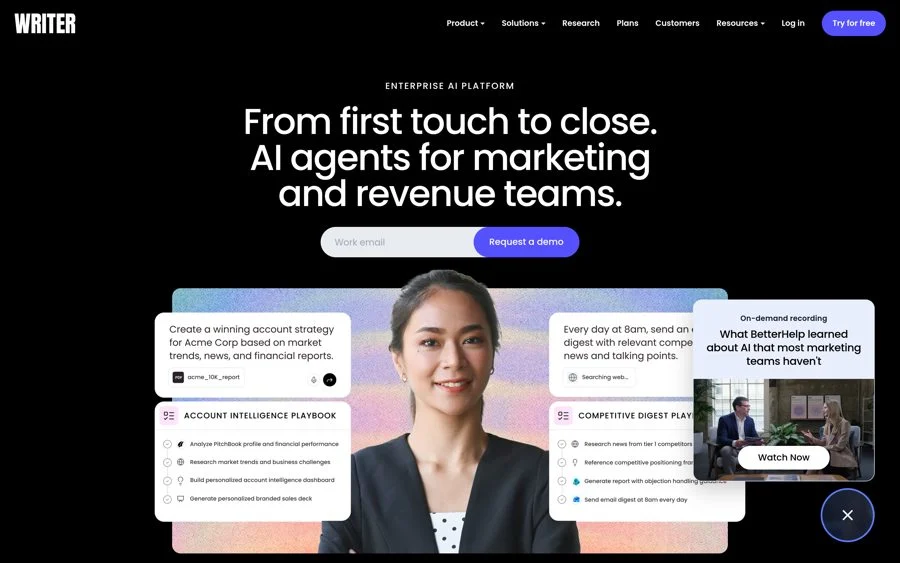
Best for: Enterprise brand and communications teams that need voice, terminology and style rules enforced inside every AI-generated draft across departments.
- Voice profiles bundle terminology lists and style guides, so every AI draft follows one encoded brand system.
- Terminology lists block restricted phrases and push approved-term updates to every team’s output at once.
- Holds ISO 27001, 27701 and 42001 plus SOC 2 Type II, a strong fit for regulated comms and legal review.
- A commissioned Forrester TEI study found 333% three-year ROI, and Qualcomm reports 2,400 hours saved a month.
Limitation: The Starter plan caps at 5 seats with a single team voice profile, so departmental voices and advanced guardrails require custom-priced Enterprise, and Writer governs words, not visual identity or assets.
Templafy
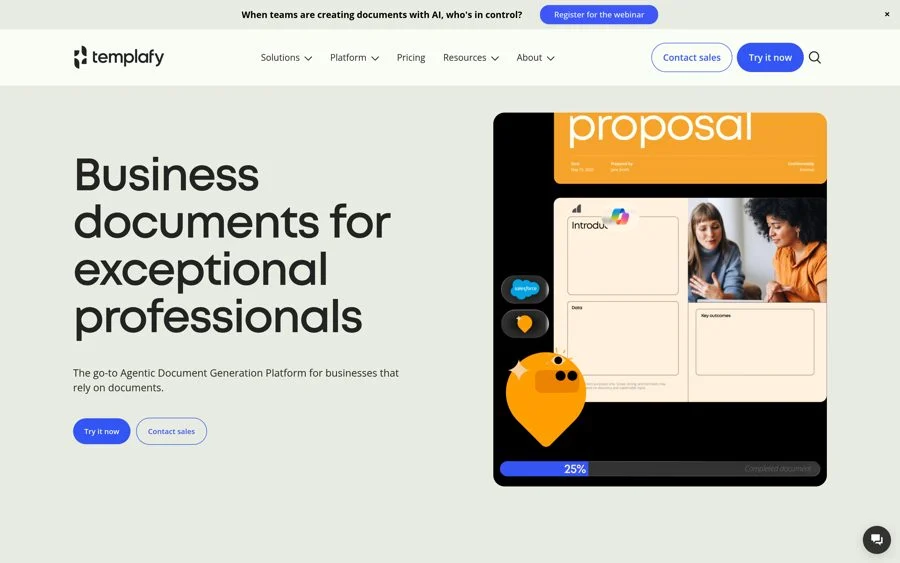
Best for: Enterprises in professional services and other document-heavy industries that need every proposal, deck and report produced on brand, including content drafted in AI assistants.
- Used by more than 4 million people, with KPMG, PwC, BDO and IKEA among named customers.
- Document Agents reach Claude, ChatGPT and Copilot via MCP, then output on approved templates and brand rules.
- A central template and asset library enforces brand inside Microsoft Office, Google Workspace and Salesforce.
- Named a 2026 Gartner Cool Vendor in Digital Workplace Applications, with SOC 2, ISO 27001 and ISO 27017.
Limitation: Templafy governs documents, decks and email signatures, not social, web, video or campaign creative, and the full rules engine and SSO sit behind custom Enterprise pricing above a 25-seat Team plan.
Markup AI
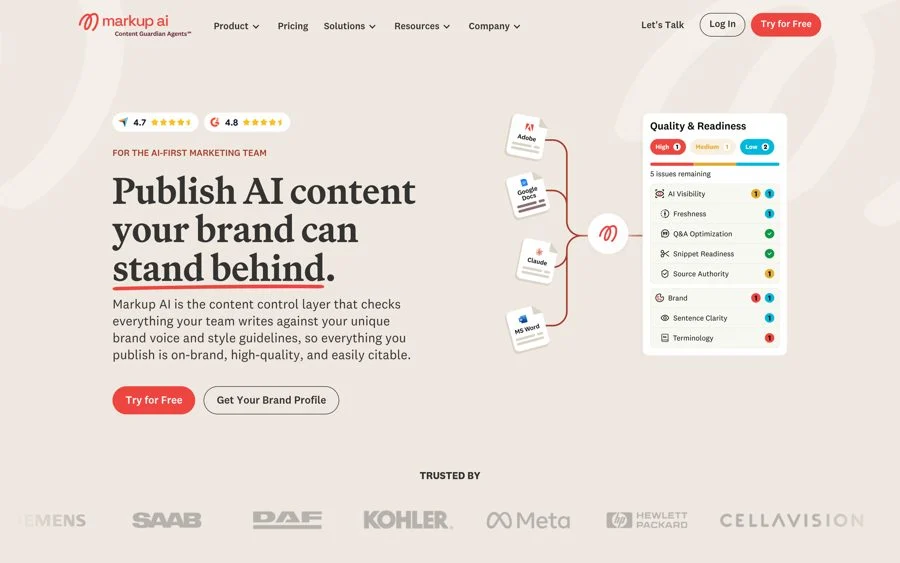
Best for: Enterprise brand, content and documentation teams that need to enforce voice, terminology and compliance across large volumes of human and AI-generated copy.
- Public tiers start at $249 a month for unlimited users and 12 million words checked a year.
- Builds on more than 20 years of Acrolinx terminology and style governance used by large enterprise content teams.
- Guardian Agents score human and AI drafts for brand voice, terminology, tone and clarity, then rewrite them.
- Won AI-Powered Writing Solution of the Year at the 2026 MarTech Breakthrough Awards for its Guardian Agents.
Limitation: It governs written text only, with no visual identity or asset management, Acrolinx-grade style standards and SSO sit in custom-priced Enterprise, and independent reviews are thin, with just 3 on Capterra.
Marq
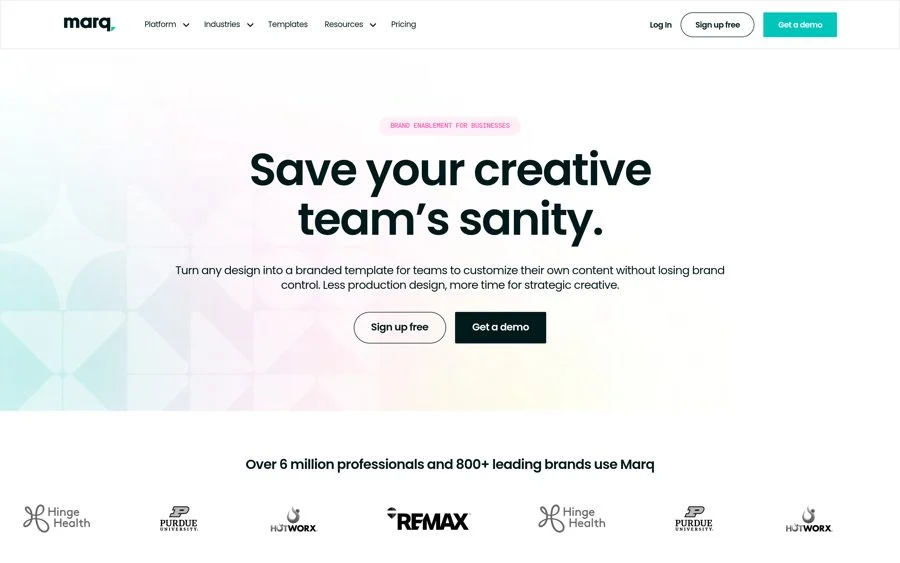
Best for: Brand teams that must let many distributed users, such as franchises, agents, sales reps and campuses, self-serve on-brand collateral from locked, data-driven templates.
- Rated 4.5/5 on Capterra across 284 reviews, and used by 6 million+ professionals and 800+ brands.
- Brand Guardian scores content as it is built, flagging logo, font, color, imagery and tone issues.
- Locked templates protect logos, colors, layouts and fonts while leaving defined zones editable by local teams.
- Data automation fills templates from CSV, Google Sheets, XML, MLS feeds or CRM records at volume.
Limitation: Its most strategic AI pieces, Brand OS and Brand Command Center, were still in beta at the Marq 2.0 launch, AI and SSO sit in the custom-quoted Enterprise tier, and Marq’s own security certifications could not be confirmed.
Side-by-Side Comparison
Summary of where each AI Brand Management Tools tends to fit best.
| Platform | Best For | Key Strength | Primary Limitation | Score |
|---|---|---|---|---|
| Bynder | Enterprises running brand governance on a DAM system of record | AI agents audit every asset against brand and legal guidelines | Pricing is quote-only and modular, with third-party Vendr data putting the median contract near $41,800 a year, and reviewers report a steep setup curve for admins and Brand Portal owners. | 94 |
| Frontify | Enterprise brand teams centralizing guidelines, assets and templates | Guidelines plus DAM in one portal, readable by AI via MCP | Pricing is quote-only on a monthly active user model that reviewers call expensive and hard to predict, and its MCP connector for AI assistants was still in beta during this evaluation. | 92 |
| Adobe GenStudio | Adobe-based enterprises scaling on-brand paid media | Brand scoring plus direct activation to 9 ad channels | Pricing is quote-only and enterprise-scale, and the product is built around paid media and email production, so teams wanting a broad brand portal or guideline hub will need AEM Assets or another tool alongside it. | 90 |
| Canva | Non-designers creating on-brand content at enterprise scale | Locked Brand Templates plus approvals across 265M+ monthly users | Canva governs templates and assets but is not a full DAM or brand-compliance scanner, AI output resolution remains too low for large-format print, and Canva signs no BAA, so it is unsuitable for regulated healthcare marketing. | 89 |
| Typeface | Fortune 500 brand teams needing governed agentic content at scale | Brand intelligence graph plus ISO 42001 certified AI governance | There is no public pricing or self-serve plan, its newest adaptive agents were still in preview with design partners, and no independent reviews of the platform could be found on G2, Capterra or Trustpilot. | 87 |
| Papirfly | Global brands running central governance with local self-serve | Locked templates plus DAM for 1,500+ brands | Pricing is quote-only with no public tiers, its conversational Brand Assistant is still labeled Beta in Papirfly’s own support docs, and its AI focuses on asset operations rather than generating new on-brand copy or imagery. | 86 |
| Writer | Enterprise teams enforcing voice and terms in every AI draft | Terminology lists and style guides baked into every generation | The Starter plan caps at 5 seats with a single team voice profile, so departmental voices and advanced guardrails require custom-priced Enterprise, and Writer governs words, not visual identity or assets. | 85 |
| Templafy | Enterprises standardizing on-brand proposals, decks and reports | Brand-governed Document Agents inside Office and AI assistants | Templafy governs documents, decks and email signatures, not social, web, video or campaign creative, and the full rules engine and SSO sit behind custom Enterprise pricing above a 25-seat Team plan. | 84 |
| Markup AI | Enterprise teams enforcing voice and terminology at scale | Deterministic brand and terminology scoring with auto-rewrites | It governs written text only, with no visual identity or asset management, Acrolinx-grade style standards and SSO sit in custom-priced Enterprise, and independent reviews are thin, with just 3 on Capterra. | 82 |
| Marq | Distributed teams self-serving on-brand collateral | Locked templates plus AI brand scoring and data automation | Its most strategic AI pieces, Brand OS and Brand Command Center, were still in beta at the Marq 2.0 launch, AI and SSO sit in the custom-quoted Enterprise tier, and Marq’s own security certifications could not be confirmed. | 80 |
How Mktg.Tech Evaluated Each AI Brand Management Tool
We used our 7-Point Evaluation Framework™, weighted for what matters most to Brand & Communications Teams.
Scope & Breadth
Brand Lifecycle Coverage – how much of the brand lifecycle one platform governs on its own, from guidelines and approved assets through templates, content creation, approvals and distribution, across both visual identity and written voice.
Quality & Reliability
Brand Consistency Accuracy – how reliably the platform’s AI detects and prevents off-brand colors, logos, fonts, terminology and tone, with checks that are explainable and grounded in the brand’s own encoded rules.
Utility & Output
On-Brand Output at Scale – whether the AI produces usable, editable on-brand assets and copy that teams can ship with light review, rather than drafts that still need a designer or editor to rebuild.
Communication & Integration
Ecosystem Reach – how far brand rules travel into the tools where content is actually made, including Adobe, Figma, Office, the CMS and the DAM, plus MCP or API access for external AI assistants.
Operational Excellence
Governance & Automation at Scale – multi-brand and multi-market control, roles and permissions, approval workflows and automation that let central brand teams scale without becoming a bottleneck.
Trust & Versatility
Security & IP Safety – SOC 2, ISO 27001 and ISO 42001 disclosures, policies on training with customer content, and AI output indemnification for brand-sensitive enterprises.
Evidence & Impact
Proven Brand Impact – verified review volume and sentiment, confirmed analyst recognition and quantified customer results tying the platform to faster, more consistent brand output.
How We Scored Each AI Brand Management Tool
Data Sources Used
- Official Product & Pricing Pages: Published plan limits, tier prices and AI feature sets read from each vendor’s own live pages, with quote-only pricing recorded as such.
- Release Notes & Product Announcements: 2025 and 2026 launches of brand compliance agents, brand intelligence engines and MCP connectors, checked for general availability rather than beta or preview status.
- Independent Review Platforms: Ratings, review counts and recurring themes from G2, Capterra, TrustRadius and Trustpilot, with blocked, missing or tiny listings named rather than averaged away.
- Analyst Evaluations: Gartner and Forrester placements in DAM, content and AI categories, marked confirmed only where a primary or analyst-quoting source was read.
- Security & Trust Centers: SOC 2, ISO 27001, ISO 42001 and AI data-use disclosures, labeled as vendor claims where the underlying report is not public.
- Customer Case Studies: Named and anonymized deployments with quantified results, attributed to the vendor unless independently published.
- Third-Party Pricing Data: Vendr and marketplace contract estimates for quote-only platforms, always labeled as third-party rather than vendor-confirmed.
Evaluation Filters
- Core Brand Capability: Govern brand identity as a primary product, through guidelines, approved assets, locked templates or voice and terminology rules, not as a side feature of a general design or writing tool.
- AI in General Availability: Ship AI that checks, generates or corrects content against brand rules that customers can use in production today, not only on a roadmap or in private preview.
- Active Development: Release meaningful product updates through 2025 and 2026, including brand AI, agent or integration capabilities.
- Enterprise & Professional Focus: Serve brand and communications teams at business scale, with roles, approvals, documented security practices and a support model beyond a community forum.
- Distributed Usability: Let non-designers in regions, departments and partner organizations produce on-brand work without central brand teams rebuilding it.
What’s Inside the Download
How the Framework Is Weighted
| Criteria | Weight | Relative Emphasis |
|---|---|---|
| Scope & Breadth | 20% | |
| Quality & Reliability | 15% | |
| Utility & Output | 15% | |
| Communication & Integration | 15% | |
| Operational Excellence | 15% | |
| Trust & Versatility | 10% | |
| Evidence & Impact | 10% |
Tool Background & Engagement Profile
| Platform | HQ / Parent Company | Typical Client Size | Primary Focus |
|---|---|---|---|
| Bynder | Amsterdam, Netherlands (majority owned by Thomas H. Lee Partners since 2022) | Upper mid-market to global enterprise | AI-powered DAM with brand governance |
| Frontify | St. Gallen, Switzerland (private, venture-backed) | Mid-market to enterprise global brands | Brand guidelines, DAM and brand portals |
| Adobe GenStudio | San Jose, CA (Adobe Inc., NASDAQ: ADBE) | Enterprise | On-brand content supply chain for paid media |
| Canva | Sydney, Australia (private, venture-backed; US$42B valuation) | SMB to global enterprise; Enterprise tier for large organizations | Template-driven on-brand visual content with AI |
| Typeface | San Francisco, CA (independent; $165M raised, $1B valuation) | Enterprise (Fortune 500 focus) | Brand-governed agentic content and orchestration |
| Papirfly | Oslo, Norway (Papirfly Group; majority owned by Verdane) | Mid-market to large enterprise (48.1% enterprise, per Papirfly) | DAM, brand portals and locked templates |
| Writer | San Francisco, CA (independent; $326M raised, $1.9B valuation) | Enterprise, with a Starter plan for up to 5 users | Governed AI content with brand voice enforcement |
| Templafy | New York, NY, with roots in Copenhagen (private, venture-backed) | Mid-market to large enterprise, strongest in professional services | Brand-compliant documents, decks and templates |
| Markup AI | New York, NY (formerly Acrolinx; majority owned by Genui Partners) | Mid-market to enterprise | Brand, style, terminology and compliance governance for written content |
| Marq | Draper, UT (formerly Lucidpress; owned by Charles Thayne Capital) | Mid-market to enterprise with distributed teams | Brand templating and governed content creation for distributed teams |
Key Capabilities Offered
Bynder
- Living web brand guidelines
- Multi-audience brand portals
- AI brand compliance agents
- Locked Studio image and video templates
- Content and asset approval workflows
- 160+ integrations plus MCP server
Frontify
- Interactive brand guidelines and portals
- Digital asset management with AI tagging
- Editable on-brand templates
- Brand Assistant AI chat and copy review
- MCP and API access for AI agents
- Brand usage analytics
Adobe GenStudio
- Brand, product and persona guidelines
- AI brand validation scoring
- ADA accessibility checks
- Template-based variant generation
- Workfront review and approval
- Direct ad platform activation
Canva
- Brand Kits (logos, colors, fonts, guidelines, brand voice)
- Locked Brand Templates
- Brand Controls and tiered design approvals
- Magic Studio / Canva AI generation and editing
- Magic Resize and multi-format content production
- Enterprise SSO/SCIM, Canva Shield and AI indemnification
Typeface
- Brand Hub and Brand Kits (Arc Graph brand intelligence)
- Brand Agent compliance checks for off-brand copy and formatting
- Arc Agents for multichannel campaign creation (email, web, ads, video)
- Multimodal image and video generation
- Arc Loop performance feedback from ad and marketing clouds
- MCP, APIs, webhooks and integrations (Salesforce, Braze, Contentful, Dynamics 365, Figma, Adobe)
Papirfly
- Digital asset management with AI tagging and search
- Brand portals and guidelines hub
- Locked multichannel templates (print, social, video, email, banners)
- AI localization and automatic asset renditions
- Asset usage and campaign analytics
- Co-op marketing fund management
Writer
- Brand voice profiles
- Terminology management (approved and restricted terms)
- Style guide enforcement
- Claims and compliance guardrails
- Knowledge Graph RAG
- Agentic Playbooks and connectors
Templafy
- Template and brand asset management
- AI Document Agents (proposals, decks, reports, RFPs)
- MCP connector for Claude, ChatGPT, Copilot, Gemini and Perplexity
- PowerPoint agent add-in for creation, editing and review
- Rules engine and enterprise knowledge grounding (RAG, SharePoint, Glean)
- Email signature management and brand content distribution
Markup AI
- Brand voice and persona scoring
- Terminology management and enforcement
- Style guide and compliance checks
- Automated rewrites of flagged content
- AI search readiness and citability checks
- API and MCP integrations (Docs, Word, CMS, DITA)
Marq
- Lockable brand templates with editable zones
- AI brand compliance scoring (Brand Guardian)
- Data-driven creative automation (CSV, Sheets, XML, MLS, CRM)
- Approval workflows and custom roles
- Multi-channel publishing: print ordering, social, email, web
- Templated personalized video (with SundaySky)
Final Takeaway From Mktg.Tech
Across all evaluated sources and weighted performance criteria, Bynder ranks as the strongest overall AI brand management tool for 2026. It wins on the category that carries the most weight here, brand lifecycle coverage, because living guidelines, the approved asset library, locked Studio templates and approvals sit in one governed system. Its AI is in production rather than preview, with a Brand Compliance Agent that audits assets for off-brand colors and logos, and its evidence base is the deepest in this group, with 228 Capterra reviews at 4.5/5 and more than 4,000 brand customers.
That does not make it the right answer for every team. Frontify is the closer fit for teams that want guidelines-first brand portals, Adobe GenStudio for enterprises scaling paid media on Adobe, and Canva for putting on-brand design in the hands of non-designers. Teams whose brand problem is written voice rather than visuals should look at Writer or Markup AI, and those already using content marketing tools to draft copy will get more from rules that travel into those tools than from another portal. The single most important decision factor is where off-brand work actually comes from in your organization today.
Editorial Independence & About Mktg.Tech
About This Research
This report was independently produced by the Mktg.Tech Research & Insights team. Rankings are based on publicly available information, vendor documentation and trust center disclosures, independent review-platform data, analyst placements confirmed against primary sources, and structured evaluation against our 7-Point Evaluation Framework. No vendor included in this analysis paid for placement, ranking influence, or editorial consideration. Rankings will be reviewed and updated on a quarterly basis as AI brand management tools, brand compliance agents and MCP-based integrations continue to evolve.
Share Your 2026 Recognition
The companies featured in Mktg.Tech’s Best AI Brand Management Tools of 2026 are invited to display this official badge on their website, documentation, or marketing materials. For transparency and verification, the badge should link back to the official report.
Use of this badge is intended for platforms included in the 2026 report and signifies verified inclusion.
Frequently Asked Questions
What are the best AI brand management tools in 2026?
Bynder ranks #1 in our 2026 evaluation with a score of 94 out of 100. It is best for mid-market and enterprise brand teams that want guidelines, approved assets, templates and AI compliance checks governed from one system of record.
How many AI brand management tools did Mktg.Tech evaluate?
We evaluated and scored 10 AI brand management tools for this ranking. Each one was assessed against the same 7-Point Evaluation Framework and scored out of 100, then ordered by final score.
How does Mktg.Tech score AI brand management tools?
Every entrant is measured against seven weighted categories: Scope & Breadth (20%), Quality & Reliability (15%), Utility & Output (15%), Communication & Integration (15%), Operational Excellence (15%), Trust & Versatility (10%), and Evidence & Impact (10%). The weights total 100%, and the resulting score determines each platform’s rank.
Which AI brand management tool is the best alternative to Bynder?
Frontify ranks #2 with a score of 92 out of 100 and leads the Brand Portal category, making it the strongest alternative for teams whose priorities differ from the overall winner.
Are these rankings sponsored or paid placements?
No. No vendor paid for placement, ranking influence, or editorial consideration. Rankings are based on publicly available information and structured evaluation, and are reviewed and refreshed on a quarterly basis.
How to Choose the Right AI Brand Management Tools
Brand management in 2026 is no longer a PDF and a shared drive. It is a governed system: a source of truth for rules and assets, a production layer where people and AI make content, and a checking layer that catches what drifts. The tools in this report each own one or two of those layers, and the right choice depends on where your brand is currently leaking.
AI has raised the stakes in both directions. It lets one brand team support thousands of content creators, but it also produces off-brand work faster than any review queue can catch. The practical question is no longer whether a platform has AI, but whether its AI is grounded in your encoded rules and leaves an audit trail when it approves or rewrites something.
1. Find Where Your Brand Is Leaking
Most failed brand-platform purchases fix the wrong problem. Start by naming where off-brand work actually comes from today.
- Visual Identity: Are wrong logos, colors and fonts showing up in regional, partner or sales-made materials?
- Written Voice: Do product names, claims and tone drift between departments, agencies and AI-drafted copy?
- Documents and Decks: Are proposals, reports and presentations built from outdated templates?
- Asset Sprawl: Can people find the current approved asset, or do they reuse whatever is in their inbox?
2. Test Whether the AI Actually Enforces Your Rules
Brand AI is only as good as the rules it is grounded in. Ask vendors to demonstrate checks against your own guidelines, not a demo brand.
- Grounding: Does the AI read your encoded guidelines, terminology and templates, or a generic style model?
- Explainability: When content is flagged, does the tool say which rule it broke and suggest a fix?
- General Availability: Which brand agents are in production today, and which are beta or roadmap?
- Human Review: Can approvals be required before AI-generated or AI-corrected content ships?
3. Follow the Rules Into Every Creation Tool
A brand system that lives in one portal is bypassed the moment someone opens another app.
- Creative Suites: Native connectors for Adobe Creative Cloud, Figma and Canva where designers already work.
- Office and Workspace: Template and terminology enforcement inside PowerPoint, Word and Google Workspace.
- AI Assistants: An MCP server or API so Claude, ChatGPT and Copilot pull live brand rules and assets.
- Publishing Channels: Links to the CMS, DAM, marketing automation and ad platforms where content goes live.
4. Plan for Scale and Distributed Teams
Brand management succeeds when local teams can move fast without central teams rebuilding their work.
- Multi-Brand Control: Separate brand kits, voices and permissions for sub-brands, regions and agencies.
- Locked Templates: Editable zones for local content with logos, layouts and legal copy locked.
- Approval Workflows: Routing by content type, market and risk, with an audit trail.
- Pricing Model: How costs scale with users, brands, storage and AI usage before you sign.
5. Verify Security, IP Safety and Proof
Brand content is high-visibility and often regulated, so trust and evidence matter as much as features.
- Certifications: Current SOC 2 Type II and ISO 27001, and ISO 42001 for AI management where offered.
- Data Use: A written commitment that your content is not used to train shared models.
- AI Indemnification: IP indemnity for AI-generated output, and the seat or tier thresholds that trigger it.
- Customer Evidence: Named references and quantified results in an industry and scale like yours.
Final Takeaway
The right AI brand management tool should make on-brand the default for everyone who creates content, while making every AI decision easier to audit. Prioritize platforms that offer:
- Coverage of Your Leak: whether that is visual identity, written voice, documents or asset sprawl.
- Rule-Grounded AI: that checks and generates against your own encoded guidelines, with explanations.
- Reach Into Creation Tools: including Office, creative suites and AI assistants through MCP or API.
- Governance at Scale: with locked templates, multi-brand control and approval workflows.
- Verified Security and IP Safety: including clear data-use policies and AI output indemnification.
Be skeptical of any vendor figure you cannot reproduce. In this category, commissioned ROI studies and vendor-published case studies are common, and the strongest signal is a demo of the AI catching real violations in your own content.