An Independent Review for Paid Media & Video Teams
Connected TV stopped being an upper-funnel experiment and became the place where TV and performance budgets meet. Moving beyond insertion orders and Nielsen ratings bought months in advance, the platforms in this report now let a paid media team target streaming households in real time, buy Netflix, Prime Video and Disney inventory programmatically, and tie a TV impression to a site visit, an app install or a sale. This report provides a structured comparison of the leading CTV advertising platforms, with The Trade Desk leading the market, to help paid media and video teams select the right platform for their specific needs. It sits alongside our ranking of demand-side platforms, since most CTV budgets are bought through one.
The Trade Desk
Best for: Agency trading desks and enterprise brands that want neutral, cross-publisher access to premium CTV supply, with UID2 identity and household-level measurement in one independent DSP.
- Retention topped 95% in Q3 2026 on $736M of quarterly revenue, a level held for more than a decade per the company.
- Premium streaming supply: Netflix audiences targetable in Kokai from Nov 2026, plus Disney DRAX via OpenPath.
- Unified ID 2.0 provides an interoperable, privacy-conscious identity layer, adopted by Roku for CTV audiences.
- Rated 4.4/5 on G2 across roughly 186 reviews, with Gracenote show-level CTV targeting and reporting added in 2026.
Limitation: A take rate estimated near 21%, a steep learning curve, Kokai migration pushback, and OpenPath exits by Dentsu and WPP raise cost and trust questions.
Amazon DSP
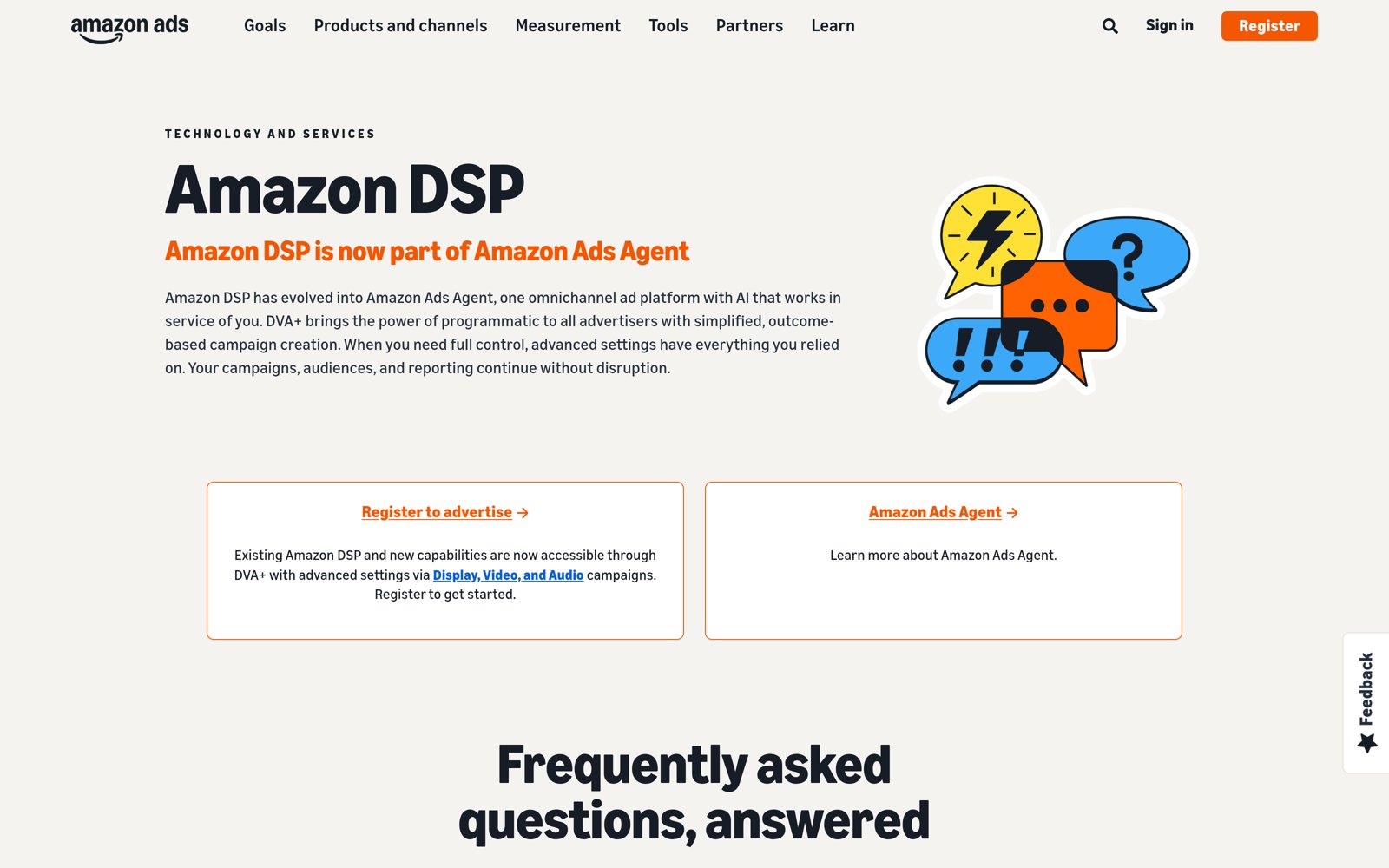
Best for: Paid media and video teams, especially brands selling on Amazon, that want Prime Video, Fire TV, Roku, and Netflix CTV reach tied to Amazon shopping and purchase signals.
- Prime Video ads reach 315M+ average monthly ad-supported viewers worldwide (Amazon data, updated Feb 2026).
- Exclusive Roku identity deal reaches an estimated 80M US CTV households, over 80% of them per Comscore data.
- Buys Netflix (PG and PMP, 11+ markets) and Disney+, Hulu, ESPN+ via DRAX alongside Amazon’s own streaming TV.
- Amazon Marketing Cloud clean room links CTV exposure to retail purchases, with IAS MRC-accredited verification.
Limitation: Its strongest shopper data stays inside Amazon’s walled garden, and the 2026 shift to AI-led DVA+ defaults reduces manual control for expert traders.
Google Display & Video 360

Best for: Enterprise brands and holding-company agencies that want YouTube on TV screens, premium streamer deals, and Google audiences managed alongside display and video in one platform.
- Buys YouTube CTV in the same insertion order as other CTV apps, so reach and frequency are managed in one place.
- Vendor claim (comScore, 2022): reaches 93% of US ad-supported CTV households and 9 of the top 10 CTV apps.
- Programmatic access to Netflix ads since August 2024, plus PG deals via Ad Manager, Magnite, FreeWheel, and Xandr.
- Nielsen DAR audience guarantees for streaming TV at no extra cost, and MRC accreditation renewed in March 2026.
Limitation: Contract pricing is opaque and the learning curve is steep, and buying through Google’s own stack raises neutrality concerns about supply paths and measurement.
Roku Advertising
Best for: Paid media and video teams that want first-party household reach on the largest U.S. streaming OS, from home screen takeovers to self-serve performance CTV for SMBs.
- Q3 2026 streaming hours hit 39.9 billion, up 9% YoY, with The Roku Channel the #2 app by U.S. engagement.
- Owns the home screen: Marquee, Spotlight and Theme units reach viewers before they pick an app to watch.
- Self-serve Ads Manager runs on pay-as-you-deliver CPMs, with Roku suggesting $500 to $1,000 to launch.
- Amazon DSP integration ties Roku and Fire TV identity to about 80M U.S. CTV households (vendor claim).
Limitation: Its best data and native units live only on Roku’s own OS, and the pending Fox acquisition adds roadmap and neutrality uncertainty for buyers.
Viant DSP (ViantAI)
Best for: US brands and agencies that want CTV-first programmatic buying tied to household-level identity, direct premium streamer supply, and outcome measurement such as site visits and in-store sales.
- CTV made up more than half of advertiser spend in Q3 2026, with over 80% of it run via Direct Access (SEC 8-K).
- Patented Household ID graph maps devices to US homes; Viant says it covers over 115 million households (vendor claim).
- Direct Access buys premium CTV straight from publishers such as Disney, cutting supply-side fees and SSP hops.
- IRIS.TV, TVision, and Waymark deals add content-level CTV data, TV attention metering, and AI video creative.
Limitation: Identity and measurement are built around US households, so global teams needing broad international CTV reach should look elsewhere.
MNTN
Best for: Performance marketers and DTC or SMB growth teams who want to run streaming TV like a lower-funnel channel, with self-serve setup, AI creative, and conversion-based reporting.
- 4,373 trailing-twelve-month active Performance TV customers at Q3 2026, per MNTN’s SEC earnings filing.
- Self-serve CTV with no stated minimums, so small brands can test TV alongside search and social budgets.
- QuickFrame AI turns a brand’s website into TV-quality ads at no extra cost, removing a big CTV entry barrier.
- Verified Visits ties household TV exposure to site visits and conversions, validated via Haus, LiftLab or GA.
Limitation: Margin on media is undisclosed and attribution leans on household-level Verified Visits, so teams needing log-level transparency or incrementality must add partners.
tvScientific
Best for: Performance marketers at DTC, app, and ecommerce brands who want CTV bought, measured, and billed like paid search or social, against conversions rather than reach.
- Vendor claim: its inventory network reaches 93% of U.S. households via direct and programmatic deals with streamers.
- Cost-per-outcome billing lets advertisers pay only for verified conversions instead of impressions, a rare CTV option.
- Ships 29 named integrations, including AppsFlyer, Branch, Shopify, LiveRamp, Rockerbox, Measured, and Upwave for lift.
- Pinterest ownership adds intent audiences; LG saw a 76% rise in reach and addressable households (vendor-reported).
Limitation: Built for conversion-driven buyers: brand teams needing SOC 2 proof, independent show-level reporting, or global reach will find little public documentation.
Madhive
Best for: Local broadcasters, station groups, and agencies running many regional CTV and omnichannel campaigns for local advertisers, including political buyers, who need market-level planning and outcome reporting.
- Used by major local broadcasters including FOX, E.W. Scripps, Hearst, and TEGNA, plus Gray Media adoption in 2026.
- Vendor claim: 8,000+ sales execs use Madhive and 50,000+ campaigns run daily, with 260 billion impressions served.
- Fraud Free Guarantee backed by HUMAN pre-bid and post-impression checks plus TAG Certified Against Fraud status.
- Maverick AI Agents (May 2026) automate local discovery, planning, activation, optimization, and reporting steps.
Limitation: Built around local and regional TV sales workflows and often white-labeled by broadcasters, so national brands wanting self-serve global CTV buying may find it narrow.
Vibe
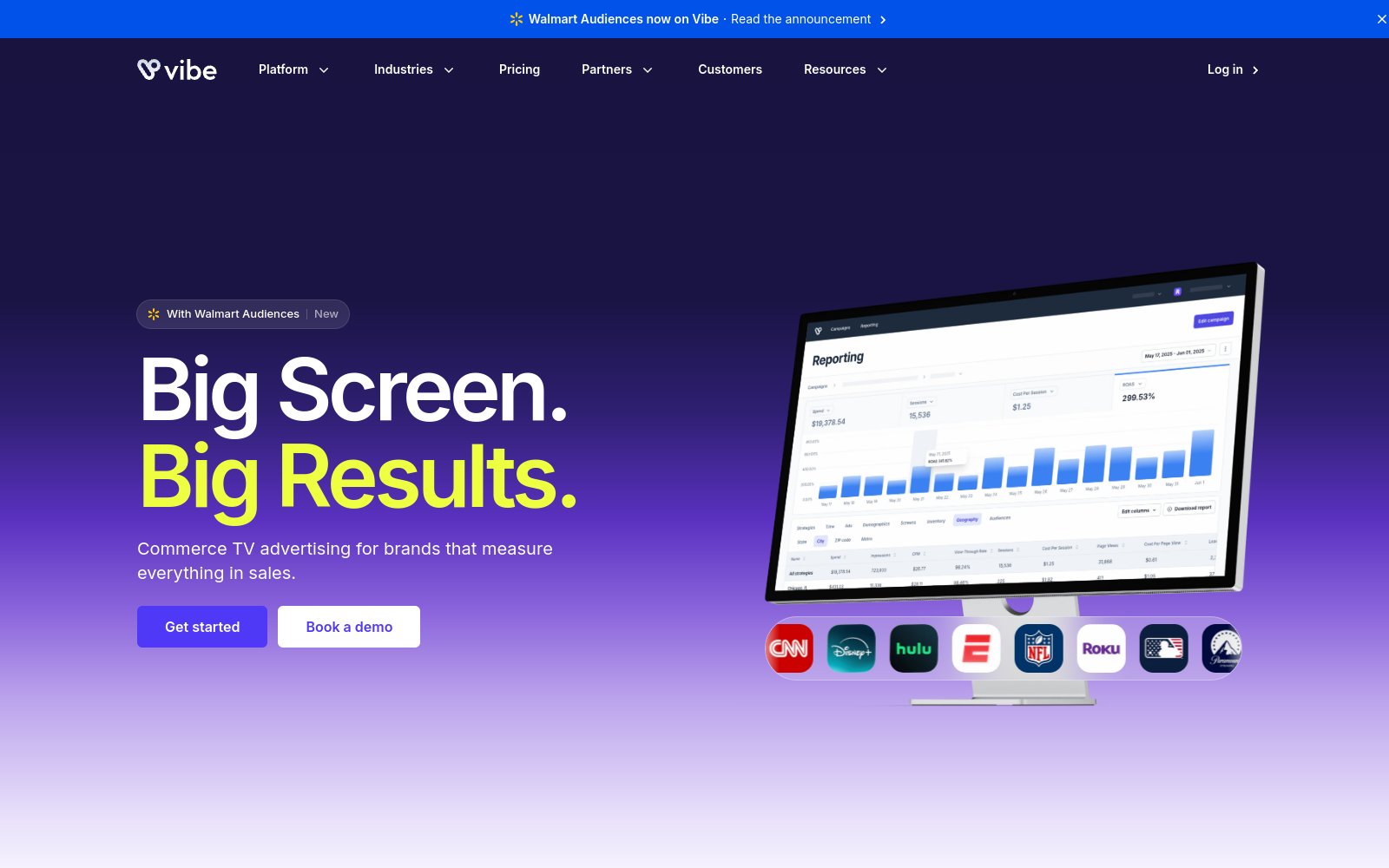
Best for: Performance-minded SMB, DTC and startup marketers, plus agencies running smaller clients, who want to test streaming TV on a small daily budget and measure it like paid social.
- Certified Supply, launched November 2025, buys only through direct publisher integrations and bans SSP resellers.
- Vendor reports 500+ premium streaming apps, including Hulu, Disney+, Peacock and Paramount+, from a $50 minimum.
- Walmart Audiences, available since the August 2026 acquisition, let SMBs target shoppers by real purchase behavior.
- Holds a 4.8/5 G2 rating on 135 reviews, with incrementality testing via geo holdouts and partners like Haus.
Limitation: No named third-party verification vendor or show-level reporting is documented publicly, and Walmart ownership may raise neutrality concerns for rival retailers.
Universal Ads
Best for: Small and midsize DTC, ecommerce and local service brands buying TV for the first time that want premium streaming and linear reach without minimums, contracts or agency overhead.
- Vendor-claimed reach of up to 90% of US households across 21 publishers, including NBCUniversal, Fox and Paramount.
- No minimum spend, no upfront commitments and no contracts, a sharp contrast with traditional TV and many CTV DSPs.
- Measurement partner bench spans Haus, Measured, Triple Whale, AppsFlyer and others, plus a Universal Ads Pixel.
- Open access via Universal Ads Manager, a Marketing API, MCP connector and 12 campaign-management partner tools.
Limitation: Inventory is limited to the Universal Audience Network’s publishers, so it lacks the open-exchange scale, deal controls and global reach of full DSPs.
Side-by-Side Comparison
Summary of where each CTV Advertising Platforms tends to fit best.
| Platform | Best For | Key Strength | Primary Limitation | Score |
|---|---|---|---|---|
| The Trade Desk | Agencies buying premium CTV across many publishers | Neutral DSP with Netflix, Disney supply and UID2 identity | A take rate estimated near 21%, a steep learning curve, Kokai migration pushback, and OpenPath exits by Dentsu and WPP raise cost and trust questions. | 95 |
| Amazon DSP | Retail-linked CTV reach across Prime Video, Roku, Netflix | 315M+ Prime Video viewers plus exclusive 80M-household Roku deal | Its strongest shopper data stays inside Amazon’s walled garden, and the 2026 shift to AI-led DVA+ defaults reduces manual control for expert traders. | 93 |
| Google Display & Video 360 | Enterprise teams pairing YouTube CTV with premium streamers | YouTube on TV plus Netflix and PG deals in one CTV insertion order | Contract pricing is opaque and the learning curve is steep, and buying through Google’s own stack raises neutrality concerns about supply paths and measurement. | 91 |
| Roku Advertising | First-party CTV reach on the largest U.S. streaming OS | Home screen native ads plus self-serve Ads Manager | Its best data and native units live only on Roku’s own OS, and the pending Fox acquisition adds roadmap and neutrality uncertainty for buyers. | 89 |
| Viant DSP (ViantAI) | US CTV-first buyers wanting household-level targeting | Household ID plus Direct Access premium CTV supply | Identity and measurement are built around US households, so global teams needing broad international CTV reach should look elsewhere. | 87 |
| MNTN | Performance and DTC teams running CTV like a lower-funnel channel | Self-serve Performance TV with AI creative and conversion attribution | Margin on media is undisclosed and attribution leans on household-level Verified Visits, so teams needing log-level transparency or incrementality must add partners. | 86 |
| tvScientific | Performance marketers buying CTV against conversions | Cost-per-outcome billing with household-level attribution | Built for conversion-driven buyers: brand teams needing SOC 2 proof, independent show-level reporting, or global reach will find little public documentation. | 84 |
| Madhive | Local broadcasters and agencies selling regional CTV | Local-first DSP with HUMAN-backed fraud guarantee and AI agents | Built around local and regional TV sales workflows and often white-labeled by broadcasters, so national brands wanting self-serve global CTV buying may find it narrow. | 82 |
| Vibe | SMBs and startups testing CTV on small budgets | Self-serve CTV from a $50 minimum with Walmart shopper audiences | No named third-party verification vendor or show-level reporting is documented publicly, and Walmart ownership may raise neutrality concerns for rival retailers. | 81 |
| Universal Ads | First-time TV advertisers and SMBs with no minimums | Premium streaming plus linear from 21 publishers, self-serve | Inventory is limited to the Universal Audience Network’s publishers, so it lacks the open-exchange scale, deal controls and global reach of full DSPs. | 79 |
How Mktg.Tech Evaluated Each CTV Advertising Platform
We used our 7-Point Evaluation Framework™, weighted for what matters most to Paid Media & Video Teams.
Scope & Breadth
Inventory & Household Reach – how much premium streaming supply one platform can reach, across major streamers, FAST channels, smart-TV and streaming OS inventory and publisher-direct deals, measured by household reach and the adjacent channels it can buy alongside CTV.
Quality & Reliability
Inventory Quality & Transparency – whether the impressions bought are real, safe and traceable, judged on fraud and invalid-traffic protection, accreditation, supply-path controls and app-level or show-level reporting.
Utility & Output
Targeting & Outcome Measurement – how precisely a team can reach the right households and prove what the spend did, through audience and household targeting, attribution to visits, conversions and sales, and incrementality testing.
Communication & Integration
Data & Measurement Integrations – clean rooms, identity graphs, first-party data onboarding, third-party measurement partners such as Nielsen, iSpot or lift-testing vendors, and documented APIs.
Operational Excellence
Campaign Workflow & Optimization at Scale – how efficiently campaigns are planned, launched and optimized, covering self-serve and managed options, AI-driven bidding and planning, creative tools and multi-advertiser management.
Trust & Versatility
Privacy, Security & Accessibility – published SOC 2 or ISO evidence, privacy-conscious identity, pricing and fee transparency, and how well budget minimums fit teams from startups to global brands.
Evidence & Impact
Proof of Outcomes – named customers, quantified case studies, public financial disclosures, independent review volume and analyst recognition that tie the platform to measurable advertising results.
How We Scored Each CTV Advertising Platform
Data Sources Used
- Official Platform & Inventory Pages: Supply partners, household reach, ad formats and channels read from each vendor’s own product and inventory pages, with vendor reach claims labeled as such.
- Public Company Filings: Quarterly SEC filings and earnings releases for the public platforms, used for revenue, customer counts, CTV share of spend and ownership changes.
- Pricing & Fee Disclosures: Published minimums and CPM ranges where they exist, quote-only and take-rate models recorded as such, and third-party fee estimates clearly labeled as third-party.
- Independent Review Platforms: Ratings, counts and recurring themes from G2, Capterra, TrustRadius and Trustpilot, with blocked pages, snippet-only figures and missing listings named.
- Measurement & Integration Documentation: Clean rooms, identity partners, attribution and lift-testing integrations, and APIs confirmed in vendor documentation and partner announcements.
- Security & Accreditation Disclosures: SOC 2, ISO 27001, MRC accreditation and TAG certification statements taken from trust centers, press releases and accreditation bodies.
- Trade Press & Product Evolution Logs: 2025 and 2026 launches, acquisitions and leadership changes from vendor newsrooms and advertising trade coverage.
Evaluation Filters
- Core CTV Capability: Must let advertisers buy connected TV or streaming video ads as a primary product, with targeting and delivery reporting.
- Outcome Reporting: Must report results beyond impressions, such as reach, site visits, conversions or sales, that a paid media team can present to stakeholders.
- Active Development: Must show material product releases during 2025 or 2026, such as new supply deals, AI tools or measurement integrations, evidenced by dated announcements.
- Professional Focus: Must support business advertisers through self-serve accounts, agency seats or managed service, not consumer-facing promotion alone.
- Independent Market Presence: Must be a currently marketed platform with a meaningful footprint in advertisers, revenue, reviews or industry coverage.
What’s Inside the Download
How the Framework Is Weighted
| Criteria | Weight | Relative Emphasis |
|---|---|---|
| Scope & Breadth | 20% | |
| Quality & Reliability | 15% | |
| Utility & Output | 15% | |
| Communication & Integration | 15% | |
| Operational Excellence | 15% | |
| Trust & Versatility | 10% | |
| Evidence & Impact | 10% |
Tool Background & Engagement Profile
| Platform | HQ / Parent Company | Typical Client Size | Primary Focus |
|---|---|---|---|
| The Trade Desk | Ventura, CA, USA (public, NASDAQ: TTD) | Mid-market to enterprise | Independent omnichannel DSP with premium CTV supply |
| Amazon DSP | Seattle, WA, USA (division of Amazon.com, Inc., public, NASDAQ: AMZN) | Mid-market to enterprise | Retail-data CTV, Prime Video, full-funnel programmatic |
| Google Display & Video 360 | Mountain View, CA, USA (Google LLC, subsidiary of Alphabet Inc.) | Enterprise and agency | Programmatic CTV, YouTube on TV, and omnichannel video |
| Roku Advertising | San Jose, CA, USA (public, Nasdaq: ROKU; pending acquisition by Fox Corporation, expected close 1H 2027) | SMB to enterprise | Streaming OS home screen, FAST and CTV video ads |
| Viant DSP (ViantAI) | Irvine, CA, USA (public, Nasdaq: DSP) | Mid-market to enterprise | CTV-first omnichannel DSP with household identity |
| MNTN | Austin, TX, USA (public, NYSE: MNTN, IPO May 2025) | SMB to mid-market, enterprise | Performance TV: CTV measured on conversions and ROAS |
| tvScientific | Redondo Beach, CA, USA (owned by Pinterest; acquisition announced Dec 2025, completed in 2026) | SMB to enterprise | Outcome-based CTV buying with deterministic attribution |
| Madhive | New York, NY, USA (private; $300M Goldman Sachs Asset Management investment, 2023) | Broadcasters, agencies, SMB | Local and regional CTV plus omnichannel media sales |
| Vibe | New York, NY, USA (acquired by Walmart, part of Walmart Connect) | SMB, startup and mid-market | Self-serve, performance-driven streaming TV ads |
| Universal Ads | Philadelphia, PA, USA (Comcast Advertising unit of Comcast Corp.; stayed with Comcast, not Versant) | SMB to mid-market | Self-serve premium streaming and linear TV for SMBs |
Key Capabilities Offered
The Trade Desk
- Kokai buying platform with AI forecasting and bidding, plus Kokai Zuma agentic AI features introduced in Q3 2026.
- OpenPath direct supply path to publishers such as Disney DRAX and Xumo, cutting intermediaries from CTV auctions.
- Unified ID 2.0 and EUID identity frameworks for household and user targeting without third-party cookies.
- Deal Desk inside Kokai for managing private marketplace and programmatic guaranteed deals directly with publishers.
- Ventura Ecosystem, launched February 2026 with VIDAA TV OS and Nexxen, extending OpenPath, UID2 and OpenAds to TV OS partners.
- Show-level CTV targeting and reporting via the Gracenote integration, plus Pause Ads formats on HBO Max and Discovery+ in Italy.
Amazon DSP
- Programmatic buying of Prime Video, Fire TV, Twitch, and Thursday Night Football streaming TV inventory in one DSP.
- Amazon Publisher Direct access to invite-only streaming TV, web, and audio publishers with zero supply fee (vendor claim).
- Netflix programmatic guaranteed and private marketplace deals plus Disney+, Hulu, and ESPN+ supply through Disney DRAX.
- Roku authenticated household identity resolution to dedupe reach and cut ad frequency across Roku OS and Prime Video.
- Amazon Marketing Cloud clean room for CTV-to-purchase attribution, new-to-brand analysis, and AWS Clean Rooms joins.
- Interactive streaming TV ads that let viewers add to cart or shop by remote click or phone scan on Prime Video.
Google Display & Video 360
- Dedicated CTV insertion order that buys YouTube on TV screens alongside Hulu, Peacock, and other ad-supported CTV apps.
- Programmatic guaranteed and private deals with Netflix, Google Ad Manager, Magnite, FreeWheel, and Xandr supply.
- Google affinity, in-market, demographic, and keyword-built custom audiences applied to CTV inventory and PG deals.
- Nielsen Digital Ad Ratings audience guarantees on streaming TV, so advertisers pay only for in-demo impressions.
- Cross-device conversion measurement with Campaign Manager 360 and Floodlight, linking CTV exposure to site actions.
- Reach planning and PG frequency management that stops serving users once a campaign frequency goal is reached.
Roku Advertising
- Home screen native units (Marquee, Spotlight, Theme) plus Roku City and Brand Showcase sponsored destinations
- Video and Pause Ads across The Roku Channel and partner apps, with 80%+ of in-stream impressions bought programmatically
- Roku Ads Manager self-serve buying with CPM bidding, max-bid caps and Shopify on-screen checkout for merchants
- Action Ads (Ok-to-Email/Text, Ok-to-Checkout, Ok-to-Remind) that let viewers respond with the Roku remote
- Privacy-focused clean room for first-party data matching, used by Omnicom, dentsu and Horizon Media (2022 launch)
- Exclusive Amazon DSP OS-level identity integration, plus DSP access via Roku Exchange and planned Google DV360
Viant DSP (ViantAI)
- Household ID identity resolution that maps connected devices to US households for CTV and cross-channel targeting.
- Direct Access program that transacts premium CTV inventory directly with publishers like Disney, bypassing SSP fees.
- ViantAI decisioning plus direct integrations with AI models like Claude, ChatGPT, and Cursor for prompt-driven campaigns.
- IRIS.TV content data (IRIS_ID) for video-level contextual targeting and brand suitability across indexed streaming files.
- TVision attention measurement and mobile meter connecting linear TV and CTV viewing to consumer actions on mobile.
- Omnichannel buying across CTV, linear TV, audio, display, DOOH, in-game, mobile, and native, with first-party list onboarding.
MNTN
- Direct access to 150+ streaming networks incl. Paramount+, Peacock, NBC, AMC, Roku plus NFL, NHL and MLB live sports.
- Matched audiences: household-level targeting built from real-time shopping behavior and competitor engagement signals.
- QuickFrame AI generates TV spots from a brand website at no added cost, editable with simple text prompts in the platform.
- Verified Visits attribution links CTV exposure to same-household site visits, conversions and revenue in full-funnel reports.
- 37 listed integrations incl. Shopify, HubSpot, Klaviyo, BigQuery, Looker, Triple Whale, Northbeam, Rockerbox and LiveRamp.
- Agency Portfolios: multiple advertiser accounts under one login, with admin, campaign manager and reporting-only roles.
tvScientific
- AI bidding toward cost per outcome, ROAS, CPM, or brand engagement goals, reallocating spend across inventory in real time.
- Deterministic household attribution linking CTV ad exposure to site visits, app installs, and purchases, with log-level data.
- Always-on incrementality testing and geo-lift analysis, plus brand lift measurement through an Upwave integration.
- Self-serve, managed, or hybrid campaign setup through a UI the vendor positions as being as simple as paid search or social.
- Direct and programmatic supply from Disney+, Hulu, NBCUniversal, Paramount, Warner Bros Discovery, Roku, Samsung, and more.
- Creative Advisor tool, launched June 2026, with early onboarded advertisers averaging a 13% conversion lift (vendor-reported).
Madhive
- Local CTV activation across premium streaming inventory such as Hulu, Disney+, Tubi, Sling, DIRECTV, FOX, and ESPN.
- Plan module with forecasting for data-driven local and regional media plans across markets and multiple channels.
- Measure module reporting outcomes from store visits to sales, including InMarket foot traffic attribution case studies.
- Omnichannel ad sales and workflow software from Frequence, acquired in 2024, for local media sellers and agencies.
- Maverick AI Agents that optimize delivery and budgets in real time and use AdImpact competitive spend data (Oct 2026).
- Fraud controls via HUMAN Ad Fraud Defense pre-bid and Ad Fraud Sensor post-impression, under a Fraud Free Guarantee.
Vibe
- Self-serve campaign builder with daily or lifetime budgets per strategy, a $50 minimum, and no annual contracts.
- Certified Supply of direct publisher integrations and vetted deal IDs across 500+ streaming apps and FAST channels.
- Audience targeting with Walmart purchase-based audiences, lookalikes, retargeting and CRM or CDP list syncing.
- Attribution and incrementality testing, including geo holdouts, with Northbeam, Triple Whale, Haus and GA links.
- AI optimization plus Vibe Studio creative tools, an AI video generator and A/B testing for streaming TV ads.
- Developer Platform API and Vibe MCP let Claude, ChatGPT or Gemini agents read data and adjust live campaigns.
Universal Ads
- Self-serve Universal Ads Manager: pick a goal, audience and budget, then launch and monitor TV campaigns in one place.
- Cross-publisher premium streaming buys across the Universal Audience Network, plus Comcast-owned linear TV since April 2026.
- Targeting by demographics, interests, behaviors and retargeting, with audience data partners Klaviyo, LiveRamp and TransUnion.
- Universal Ads Pixel and geo lift studies measure site visits, conversions and incremental ROAS from TV exposure.
- Creator Studio AI video generator builds TV-ready spots from a website URL, or advertisers upload their own assets.
- Marketing API and MCP connector automate campaigns, reporting and attribution; 12 partner platforms can book its TV ads.
Final Takeaway From Mktg.Tech
Across all evaluated sources and weighted performance criteria, The Trade Desk ranks as the strongest overall CTV advertising platform for 2026. It wins on the criteria that carry the most weight for a paid media team: neutral access to premium streaming supply, including Netflix audiences in Kokai and Disney inventory via OpenPath, the deepest data and identity ecosystem through Unified ID 2.0 and its measurement partners, and the strongest public evidence base, with retention above 95% reported in its Q3 2026 filing. Amazon DSP runs it close on reach, pairing Prime Video with exclusive Roku household identity and Netflix deals, and Google Display & Video 360 is the strongest choice where YouTube on TV screens must sit in the same plan as other streamers.
Below the top tier the right answer depends on what CTV is for. Roku Advertising owns the largest US streaming home screen, Viant suits US buyers who want household identity and direct publisher paths, and MNTN and tvScientific are built for performance marketers who want TV measured like search or social. Madhive is the specialist for local and regional TV, Vibe is the lowest-barrier way for small brands to test streaming TV from a $50 minimum, and Universal Ads gives first-time TV advertisers premium streaming and linear reach with no minimums. Readers who also buy display, audio and native programmatically should compare these against our demand-side platforms ranking. The single most important decision factor is inventory fit: confirm the platform reaches the streamers, households and markets your audience actually watches before comparing any dashboard.
Editorial Independence & About Mktg.Tech
About This Research
This report was independently produced by the Mktg.Tech Research & Insights team. Rankings are based on publicly available information, vendor inventory, pricing and measurement documentation, public company filings, security and accreditation disclosures, independent review-platform data, and structured evaluation against our 7-Point Evaluation Framework. No vendor included in this analysis paid for placement, ranking influence, or editorial consideration. Rankings will be reviewed and updated on a quarterly basis as connected TV advertising continues to evolve.

Share Your 2026 Recognition
The companies featured in Mktg.Tech’s Best CTV Advertising Platforms of 2026 are invited to display this official badge on their website, documentation, or marketing materials. For transparency and verification, the badge should link back to the official report.
Use of this badge is intended for platforms included in the 2026 report and signifies verified inclusion.
Frequently Asked Questions
What are the best CTV advertising platforms in 2026?
The Trade Desk ranks #1 in our 2026 evaluation with a score of 95 out of 100. It is best for agency trading desks and enterprise brands that want neutral, cross-publisher access to premium CTV supply, with UID2 identity and household-level measurement in one independent DSP.
How many CTV advertising platforms did Mktg.Tech evaluate?
We evaluated and scored 10 CTV advertising platforms for this ranking. Each one was assessed against the same 7-Point Evaluation Framework and scored out of 100, then ordered by final score.
How does Mktg.Tech score CTV advertising platforms?
Every entrant is measured against seven weighted categories: Scope & Breadth (20%), Quality & Reliability (15%), Utility & Output (15%), Communication & Integration (15%), Operational Excellence (15%), Trust & Versatility (10%), and Evidence & Impact (10%). The weights total 100%, and the resulting score determines each platform’s rank.
Which CTV advertising platform is the best alternative to The Trade Desk?
Amazon DSP ranks #2 with a score of 93 out of 100 and leads the Retail Media + CTV category, making it the strongest alternative for teams whose priorities differ from the overall winner.
Are these rankings sponsored or paid placements?
No. No vendor paid for placement, ranking influence, or editorial consideration. Rankings are based on publicly available information and structured evaluation, and are reviewed and refreshed on a quarterly basis.
How to Choose the Right CTV Advertising Platforms
Choosing a CTV advertising platform in 2026 is less about whether a tool can put an ad on a television than about which televisions, which households and which proof. Every platform in this report can buy streaming inventory. They differ sharply in how much premium supply they reach, how transparent they are about where an ad ran, what they charge on top of media, and whether the results they report will survive a question from finance.
The second thing to settle before a demo is what CTV is for in your plan. Brand reach against cord-cutters, performance campaigns measured like paid social, local and regional coverage, and retail-linked targeting all run on connected TV, but they reward different strengths. Decide which matters most, because the right platform for a holding-company trading desk is often the wrong one for a DTC brand testing TV for the first time.
1. Map the Inventory You Actually Need
Reach claims are the headline number on every CTV site, and they are rarely comparable. Start from the apps and audiences that matter to you, not from the vendor’s household total.
- Premium Streamers: Confirm which major services, such as Netflix, Prime Video, Disney, Peacock or YouTube, can actually be bought and on what deal terms.
- FAST and OS Inventory: Check access to free ad-supported channels and streaming OS home screens, which often carry the cheapest reach.
- Live Sports and Events: Ask how live sports and tentpole inventory are sold, since many platforms reach it only through private deals.
- Markets Beyond the US: List every country in scope and ask for proof of supply there, since most CTV identity and inventory is US-centric.
2. Demand Transparency on Where Ads Ran
CTV has a long history of opaque supply paths and spoofed devices. Treat transparency as a requirement, not a feature.
- App and Show Reporting: Require app-level reporting at minimum, and show-level or content-level reporting where the platform offers it.
- Fraud Protection: Ask which invalid-traffic vendor screens impressions and whether the platform holds TAG or MRC credentials.
- Supply Path: Find out how many resellers sit between you and the publisher, and whether direct publisher paths are available.
- Fees and Take Rates: Get the platform fee, data fees and any media margin in writing, since several platforms do not publish them.
3. Decide How You Will Prove Results
Measurement is where CTV earns or loses its budget. Agree the metrics before you compare dashboards.
- Attribution Model: Understand whether results come from household IP matching, device graphs or clean rooms, and what each can and cannot prove.
- Incrementality: Plan geo holdouts or third-party lift tests rather than relying on view-through attribution alone.
- Cross-Channel Context: Check whether CTV results can be compared with search, social and linear TV in the same reporting.
- Independent Validation: Prefer platforms that support named measurement partners such as Nielsen, iSpot or lift-testing vendors.
4. Match the Workflow to Your Team
A platform built for a trading desk can overwhelm a two-person growth team, and a simple self-serve tool can frustrate an agency running dozens of brands.
- Self-Serve or Managed: Decide whether your team will run campaigns hands-on or needs a managed-service option with account support.
- Creative Production: Check whether the platform can produce TV-ready video from existing assets, a common bottleneck for first-time buyers.
- AI Optimization: Ask what automated bidding and planning decide on their own, and how much manual control remains available.
- Data Connections: Confirm how first-party data, conversion pixels and analytics tools connect, and whether an API is available.
5. Pressure-Test Cost, Ownership and Proof
The CTV market consolidated quickly in 2025 and 2026, and several platforms changed owners. Confirm what you are signing up for.
- Minimums and Commitments: Compare minimum budgets, contract terms and managed-service thresholds against the budget you can actually test with.
- Ownership and Neutrality: Note which platforms are owned by retailers, streamers or media companies, and whether that affects supply or data access.
- Security Evidence: Request a current SOC 2 report or equivalent before sharing customer data or conversion feeds.
- References Like You: Ask for case studies and references from advertisers with a similar budget, category and goal.
Final Takeaway
The right CTV advertising platform should make every impression easier to place, every household easier to reach and every result easier to defend. Prioritize platforms that offer:
- The Right Inventory: across the streamers, FAST channels and markets your audience actually watches.
- Transparent Supply: with app-level or show-level reporting, fraud protection and clear fees.
- Measurement That Holds Up: outcome attribution backed by incrementality testing and independent partners.
- A Workflow That Fits: self-serve or managed, with creative and data connections your team can run.
- Verifiable Proof: current security evidence, public results and references that look like your own business.
One pattern runs through this category and it is worth stating plainly: almost every household reach figure and case study result in CTV advertising is published by the vendor itself, and reach is defined differently by each one. Treat them as evidence of what is possible, run a measured test with a holdout, and judge every platform on what it proves for you.